
A website redesign does not have one honest price because it is rarely one kind of job. You may be changing a few pages on a site you can already edit, or protecting useful content, search visibility, links, forms, and enquiries while several parts change underneath. The decision is not simply whether a redesign is worth paying for. It is which way to pay for the amount of change your existing site actually needs.
That is why page count makes a poor shortcut. A small site can still demand careful content migration, redirects, mobile performance work, technical cleanup, or a new editing setup. A larger site may be relatively contained if its structure and content remain useful. In this guide, cost means the whole arrangement: the work, the owner effort, the risk, and what has to keep working when the new version goes live.
Mirin's public service overview describes the handled website model behind this advice: read the overview.
Why redesign costs are hard to compare
The decision has two parts. First, should you redo the website you already have rather than leave it alone or start elsewhere? Second, if a redo makes sense, should you do it yourself, hire a freelancer, hire an agency, or choose a managed makeover? Treating those as separate questions makes the price easier to reason about.
A new brochure site can begin with a blank structure and a defined set of pages. A redesign begins with history. Some pages may still attract useful visitors, some wording may explain the service well, and some links may point to addresses that other sites or customers already use. The work is partly improvement and partly preservation.
A dated appearance is visible, but it is not always the main problem. The site may be difficult to edit, slow on phones, awkward for enquiries, or built around a structure that no longer matches the business. Those problems can sit beneath a small page count, so a simple visual refresh may not address the reason the owner is considering change.
The useful comparison is therefore not a headline figure beside another headline figure. It is what each route includes, what you must prepare, what you must review, and what happens if a useful page, link, form, or piece of content is overlooked. Two projects with the same number of pages can carry very different amounts of work.
Start by separating four questions. What stays from the current site? What moves or gets rewritten? What must keep working during and after the change? Who carries planning, decisions, testing, and the risk of missing something important? These questions describe the project more accurately than the words small, medium, or complete redesign.
When the decision reaches budget and scope, compare Mirin's current service options and pricing.
Keeping the existing platform may reduce the amount of rebuilding, but it may also preserve the problem that made you consider a redesign. Changing the platform may make future editing easier, while creating more work to move content, protect links, reconnect forms, and check the finished site. The right comparison includes both sides of that exchange.
Four ways to pay for a redesign
You may have come here for a single number. Published ranges for redesign work come from providers pricing their own scope, with no shared definition of what a redesign includes, so two figures that look comparable can describe very different jobs. This guide prices each route by the structure of the work, which is the part you can check in any quote.
The first option is to fix the site yourself. This can be right when you can edit the current platform, the changes are contained, the content is already in good shape, and your time is less costly than handing over the work. You keep control and avoid paying someone else, but you also own planning, implementation, checking, and recovery when something goes wrong.
The second option is a freelancer. This can fit a focused brief such as refreshing the design, improving a small set of pages, or addressing a specific technical problem. A freelancer may be the sensible choice when you can define the work clearly and remain available for content, decisions, feedback, and testing. The project depends heavily on the brief and working relationship.
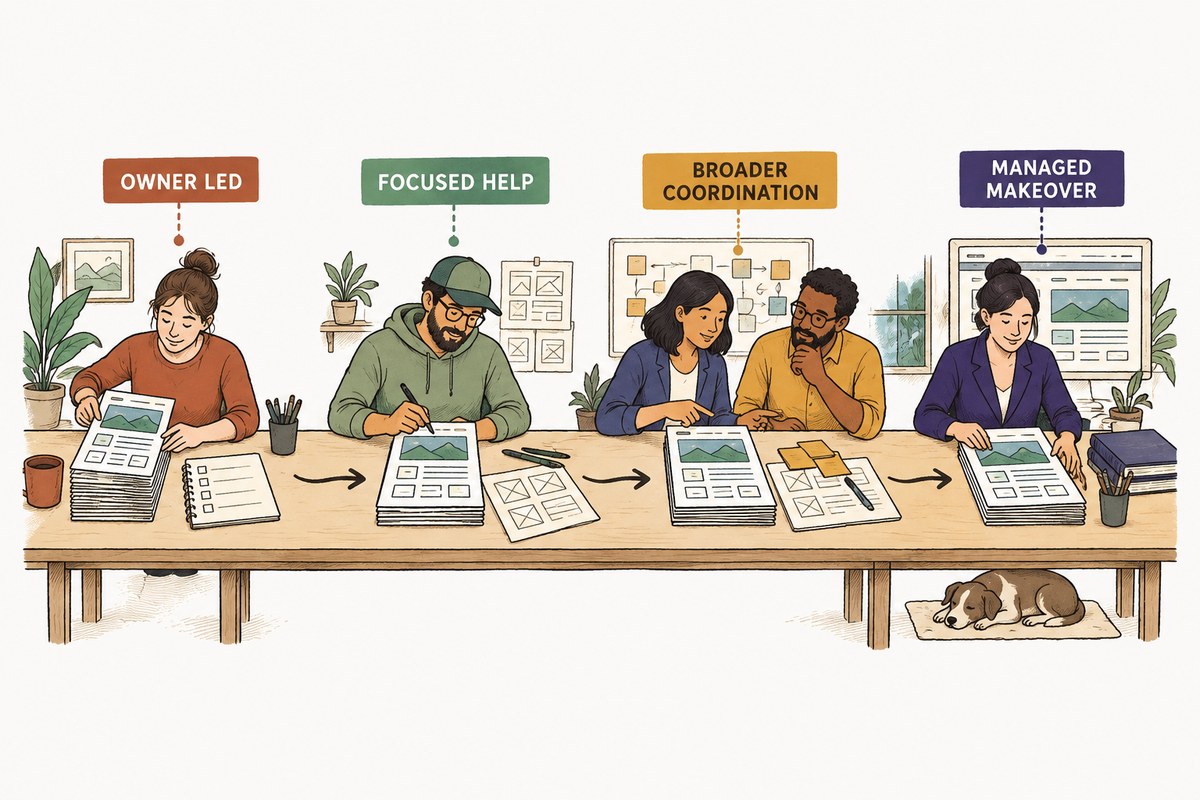
The third option is an agency. This can fit a broader redesign involving several disciplines, multiple decision makers, a larger content operation, or more complicated technical coordination. The agency route may bring a more formal process, but that process is part of the work you are paying for. It can be unnecessary for a contained job and useful when the project has many moving parts.
The fourth option is a done for you makeover with Mirin. This fits an owner who wants the redesign managed rather than becoming the project manager. It is relevant when the current site needs a practical improvement and the owner values having the work organised, built, and prepared with less day to day involvement from them. The exact fit still needs to be checked before choosing it.
Mirin does not sell a DIY service, and that matters to the comparison. If you have the time, confidence, and low risk requirements for making the changes yourself, doing it yourself may be the better answer. You should not pay for managed work merely because a managed option exists. The point is to match the route to the work you can realistically carry.
The cost guides for specific kinds of business follow this same shape. For a small appointment business, read how much a salon website costs. For a fuller treatment menu, read how much a med spa website costs. For a trades business, read what a contractor website costs. Each one compares the routes a real project can take.
For the operating model behind that work, explore how Mirin plans, builds, and maintains websites.
Every route still needs an owner contribution, even when somebody else does the building. Someone must explain the business, supply or approve content, answer questions, review drafts, test important actions, and decide what is acceptable. A managed project reduces the amount you carry, but it does not remove the need for useful information and timely decisions.
The scope of change decides the price
The deciding variable is not the number of pages alone. It is how much of the existing website must change while preserving what already works. A contained redesign might keep the platform, page structure, wording, links, and forms while improving the visual system and mobile experience. A broader project may change nearly every one of those elements.
Keeping the current content can make the work more contained when that content still describes the business accurately. Rewriting it adds decisions, drafting, review, and migration. Moving content into a different structure adds another layer because each page needs a new home, a suitable address, and a check that important meaning has not been lost.
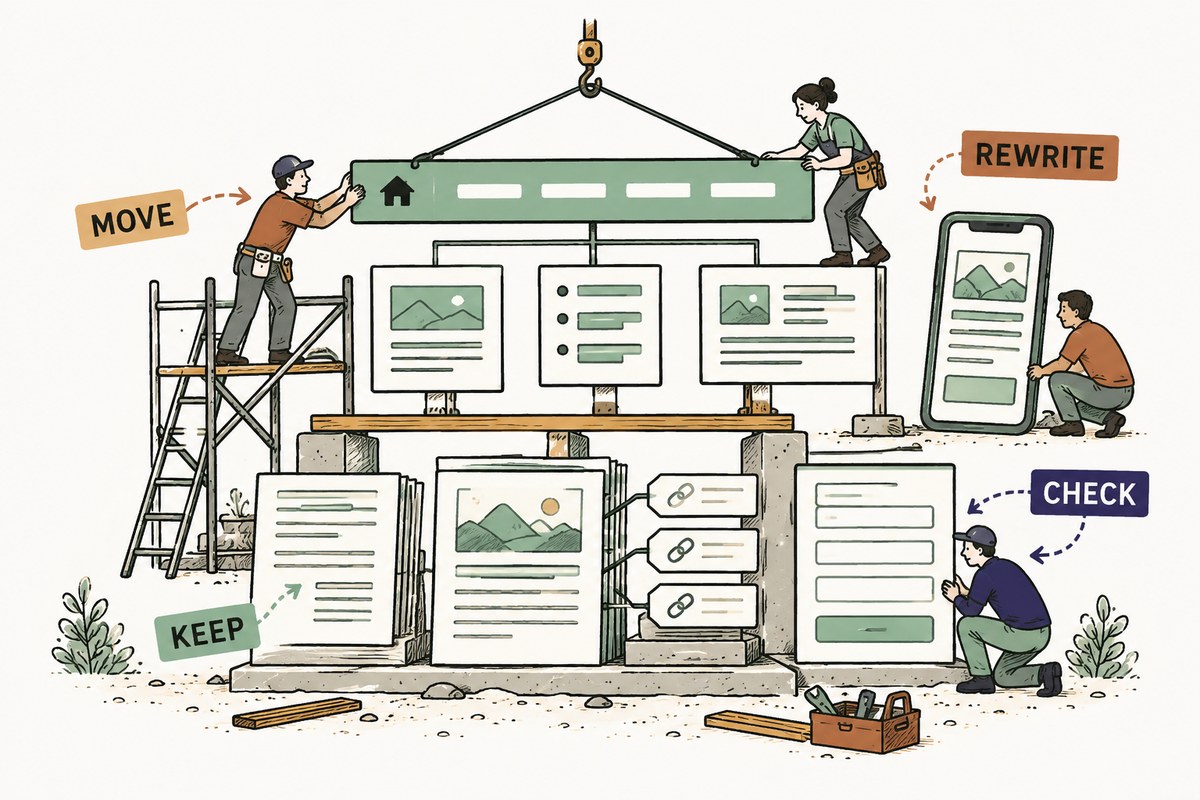
Design changes vary in depth too. Updating type, spacing, colour, and page composition is different from changing the navigation, service structure, enquiry journey, and templates. A new design can expose old content problems, while a content rewrite can reveal that the old structure no longer helps people find the right service.
Mobile performance and technical cleanup can widen the job even when the visible redesign looks modest. Images, scripts, forms, integrations, and page behaviour may need attention. If the current site connects to booking, email, payments, maps, or another service, each connection becomes something to inspect rather than assume will survive the change.
Search visibility and links need their own consideration. Useful pages may have addresses that other sites reference or that people have saved. Changing those addresses without a plan can create avoidable risk. A redesign may need a record of important pages, careful redirects, and checks after launch. That is preservation work, not decoration.
The broader decision framework is explained in Mirin's small business website approach.
Before choosing a route, it also helps to know what a small business website costs when a business starts from nothing, since that is the comparison a redesign quote deserves.
Staged work can change the shape of the project. You might improve the highest value pages first, then address the rest after learning from the first stage. That can suit a business that cannot change everything at once. An all at once project may be cleaner for a major structural change, but it concentrates decisions, review, and launch risk in one period.
The cost of choosing the wrong route
Choosing DIY when the work exceeds your available time can turn a reasonable project into a stalled one. The financial cost is not the only concern. Important pages may remain unfinished, mobile problems may wait, and the owner may spend working hours on website tasks instead of serving customers. DIY is a good route only when its demands fit your actual week.
A freelancer can be the right answer for a defined job, but a narrow brief can become a limitation when the project keeps expanding. Availability may be limited, or the freelancer may not be set up to handle content, search related preservation, integrations, and ongoing decisions together. That does not make freelancing weak. It means the brief must match the capacity.
An agency can bring useful structure to a complex project, but the same structure can feel heavy for a small, contained redesign. More meetings, approvals, roles, and formal stages may be sensible when several people or systems must align. They may be unnecessary when one owner needs a focused improvement and can make decisions quickly.
A done for you route can reduce the project management burden, but it still needs a fit check. You should understand what is included, what you must provide, how content decisions work, and what happens to important pages, links, forms, and future editing. Managed work is not a reason to stop asking practical questions.
The assets at risk are concrete. They include useful explanations of your services, pages people already find, links that lead customers to you, enquiry forms that actually arrive, and the ability to make ordinary edits later. A route is unsuitable when it makes those assets difficult to protect or leaves nobody clearly responsible for checking them.
No route guarantees calls, rankings, or a better business result. The choice changes where the work and risk sit. DIY leaves more with the owner, a freelancer may require a tightly bounded brief, an agency may suit coordination, and managed work may suit an owner who wants less operational burden. The sensible question is not which route sounds most impressive, but which one can protect the right things.
How to find your redesign cost category
Begin with editability. Can you make ordinary changes to the current site without specialist help? If yes, a contained job may be possible without changing the underlying setup. If every small update is difficult, the cost question includes the future editing experience, not just the appearance of the new pages.
Next ask whether the current content and structure are worth keeping. Useful service explanations and a familiar set of pages may favour a careful redesign. Thin, outdated, duplicated, or confusing content may call for rewriting and a new structure. The amount that moves or changes is often more important than the amount that exists.
Then check the preservation burden. Do important pages receive visitors? Do other websites link to them? Are there forms, booking steps, payment connections, or other actions that must keep working? If the answer is yes, the project needs active checking and possibly redirects or staged work. That moves it beyond a purely visual refresh.
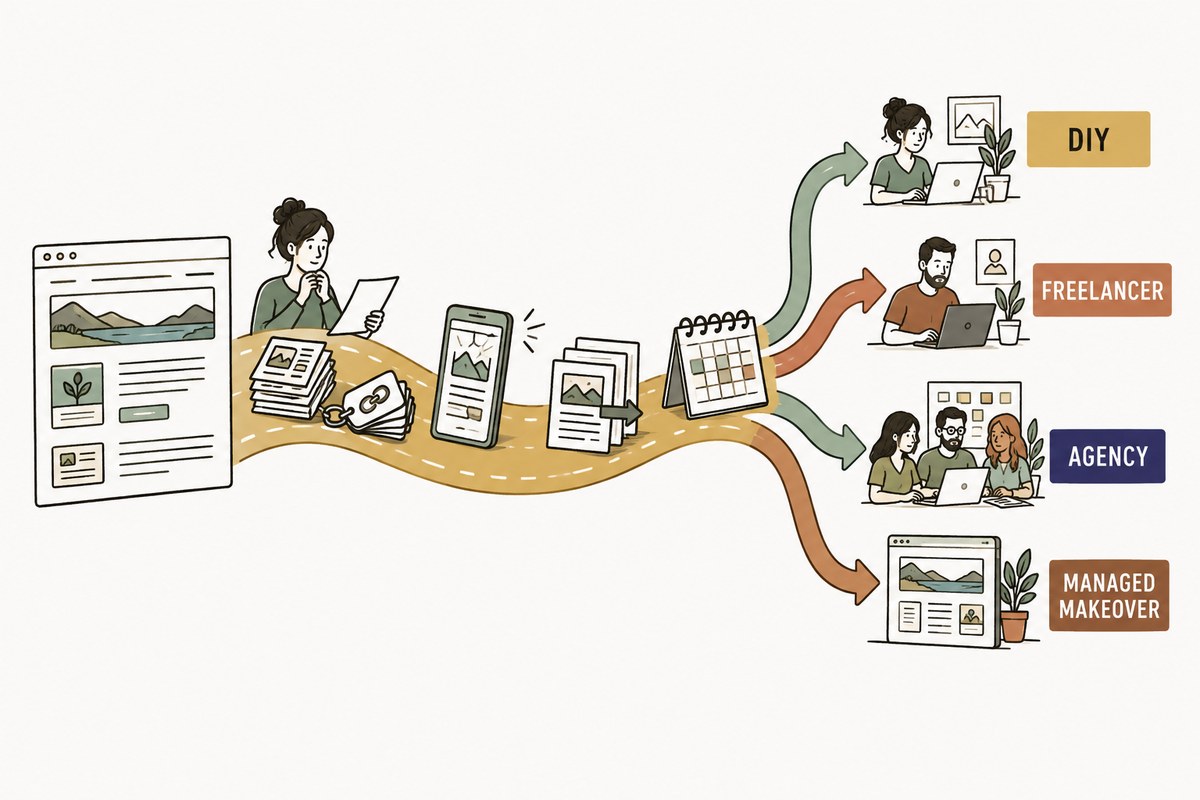
Mobile and technical issues are another dividing line. If the site loads slowly on phones, behaves unpredictably, or contains integrations you cannot inspect confidently, the work may need specialist attention. That does not automatically mean an agency. It does mean that a low effort estimate based only on changing colours and images is unlikely to describe the whole job.
Content volume also matters, but not as a simple page total. Ten pages that need careful rewriting, restructuring, and migration can demand more involvement than many pages that can move with limited change. Count the decisions attached to each page: keep, rewrite, combine, remove, move, redirect, or test.
Finally, be honest about your available time and tolerance for risk. A capable owner with a quiet period and a contained brief may choose DIY. An owner with a clear task and limited specialist needs may choose a freelancer. A project with many stakeholders or connected systems may suit an agency. An owner who wants the work managed may look at a done for you makeover.
Choose the redesign route that fits
Choose DIY when the current site is editable, the changes are contained, the content is clear, and you can give the work steady attention. This is not the cheap answer by definition. It is the answer when your time, confidence, and tolerance for checking make self directed work sensible, and when the consequences of a mistake are manageable.
Choose a freelancer when you can describe the result and separate the specialist work from the owner work. Be ready to provide content, answer questions, review drafts, and test the finished site. This route fits a focused redesign better than an uncertain project whose scope changes every time someone examines the existing website.
Choose an agency when the redesign needs broader coordination. Multiple stakeholders, a large content move, connected systems, or a substantial structural change can justify a more formal process. You may not need that level of involvement for a small improvement, but you should not avoid it when the project genuinely depends on several kinds of work aligning.
Choose Mirin when your answers point to a managed small business makeover. That usually means the existing site needs meaningful improvement, you want less responsibility for organising the work, and you still need the practical details of content, mobile experience, important pages, links, enquiries, and future editing considered together.
You should not choose Mirin if you have the time and confidence to make a contained change yourself, or if your project requires a large multi stakeholder programme that needs a broader agency structure. A good decision can point away from Mirin. The route should fit the project rather than the other way around.
The editing workflow is explained in Mirin's visual page builder guide.
If managed work is the right category, the useful next step is a project conversation rather than a guess from a headline price. Describe what the current site does well, what is failing, what must be protected, and how much of the work you want to carry. Exact pricing depends on that structure when no published price applies.