
An electrician website can cost very little to launch and still demand regular work from the owner. The useful comparison is not simply DIY versus professional. It is who will keep your service area, hours, licensing information, emergency call instructions, services, phone number, and contact form accurate after launch. If you have time and want direct control, a DIY builder may be sensible. If you want the website handled, a done for you service may fit better. Freelancer and agency work sit between those choices, with different levels of help and control.
There is no approved electrician specific market price that can honestly answer this question with one number. A freelancer or agency will usually depend on the scope and quote. A builder has its own subscription and add on costs. Mirin publishes its current website pricing separately. The real cost is the combination of launch spending, ongoing attention, update responsibility, and the consequences of leaving important information behind. That is the decision this guide helps you make.
Mirin's public service overview describes the handled website model behind this advice: read the overview.
Why electrician website costs are hard to compare
A website for an electrical business has more to maintain than a logo and a contact button. It may need service pages, a defined service area, opening hours, emergency call instructions, licensing wording, photos, phone details, and a working enquiry path. The launch price tells you what it takes to put those pieces online. It does not tell you who keeps them correct.
That distinction creates the first hidden cost. If your hours change and you must find the login, remember how the page is structured, edit the right section, check the mobile version, and publish the change, the website is also asking for your time. The same is true when you add a service, change your coverage area, or replace an emergency number.
The information deserves particular care. Licensing wording and required details vary by jurisdiction, so verify them with your own licensing authority rather than copying another contractor's language. The website should also make it clear what customers should do in an emergency, without making promises your business cannot keep or presenting outdated availability as current.
When the decision reaches budget and scope, compare Mirin's current service options and pricing.
So compare four things together: what launch includes, what you control, who makes updates, and how quickly important changes can happen. A low purchase price can be the right answer when you genuinely want to operate the site. It can be the wrong answer when it quietly transfers another recurring job to an already busy owner.
What each website option really includes
A DIY builder gives you the most direct control. You choose the template, write the pages, publish changes, and usually carry the builder subscription and any extras yourself. It is the right answer when you are comfortable learning the tool, can protect time for updates, and want to make small changes without waiting for anyone else.
A freelancer can be a good fit for a defined build, a redesign, or a trusted working relationship. You may get more tailored writing and design than a template gives you, while keeping a direct person to contact. Ask whether the quote includes future edits, how urgent changes are handled, and who owns the accounts and content.
An agency is sensible when the website needs deeper strategy, custom work, integrations, or a coordinated project with several contributors. Its process may bring planning and specialist capability, but it can also bring more meetings, approvals, and cost than a straightforward electrical business website needs. The right agency engagement makes that complexity useful rather than ceremonial.
For more practical context, continue with the Mirin Journal's website strategy library.
Mirin does not sell a DIY builder, a freelancer arrangement, or a traditional agency engagement. A done for you website is a different trade: less direct editing control in exchange for having the website handled. That can be sensible for an owner who wants credible pages and ongoing help without taking on another software system. It is not the right answer for someone who wants to build and change every part personally.
The deciding variable is update responsibility
The deciding question is simple: who will notice and make the next important change correctly and quickly? Access is not the same as responsibility. You may have a login, but that does not mean anyone has agreed to notice that your service area changed, confirm the new wording, publish it, and check that customers can still reach you.
Make a list of the changes your business actually faces. Licensing details may need careful verification. Service areas can expand or narrow. Hours can change around holidays or seasonal demand. Emergency call instructions may need immediate attention. Services, phone numbers, form destinations, and team information can all become inaccurate without looking obviously broken.
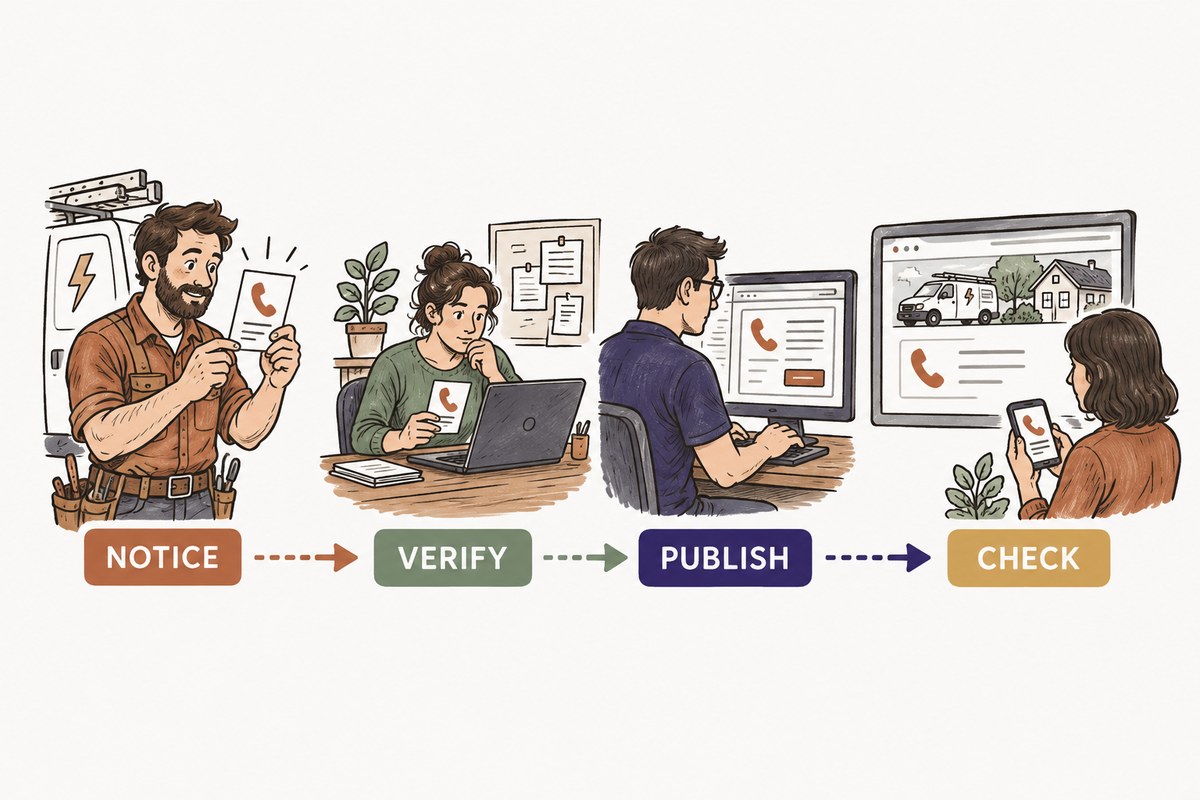
With DIY, you are normally the person who spots the change and makes it. With a freelancer, responsibility depends on the relationship you bought, not the fact that the freelancer built the site. With an agency, a maintenance agreement and its response process matter more than the agency label. With done for you service, the value depends on what is covered and how you submit updates.
A useful test is to ask what would happen on a busy Tuesday when your emergency number changes. Who receives the instruction? Who confirms the right page and contact path? Who publishes it? Who checks the result? If the answer is only you, you are choosing control and carrying the operating work that comes with it.
Choosing the wrong setup creates hidden costs
A neglected DIY site does not need to fail dramatically to become expensive in practice. One old opening time, missing service area, or outdated emergency instruction can create customer confusion. The cost may be time spent correcting the problem, repeated explanations on the phone, or a missed opportunity that you cannot reliably measure. The risk is the gap between knowing a change matters and having time to make it.
A freelancer relationship can create a different problem when the original build is finished but ongoing coverage was never agreed. You may have a capable person who is unavailable when you need a quick correction, or a site that only they understand. A defined project is still a good choice when you have someone internal to own future edits or a clear agreement for ongoing help.
An agency can be the wrong size of solution when your needs are simple and every adjustment must pass through a heavy process. Custom strategy and integrations are valuable when you need them. They are less valuable when changing a holiday hour requires a long approval chain. The hidden cost is delay, duplicated explanations, and paying for complexity that does not solve your daily problem.
A managed arrangement can also be wrong. You may have less direct control over the underlying editing process, and some custom requests may depend on the service scope. If your business needs unusual integrations, frequent experiments, or a full internal marketing function, an agency or capable freelancer may serve you better. The honest comparison includes the control you give up, not only the work you avoid.
Use your update habits to find your fit
Start with your last few website changes, not with a feature list. Who noticed that your hours, service area, phone number, or services needed attention? Who made the edit? How long did it take? If the answer is that nobody owns those changes, the most attractive launch price is not yet a complete plan.
DIY fits an owner or team member who wants direct editing control and can reserve time for publishing and checking changes. A freelancer fits a defined project when you have a trusted person for the work and a realistic plan for later edits. Neither choice is inferior when the person responsible is known and available.
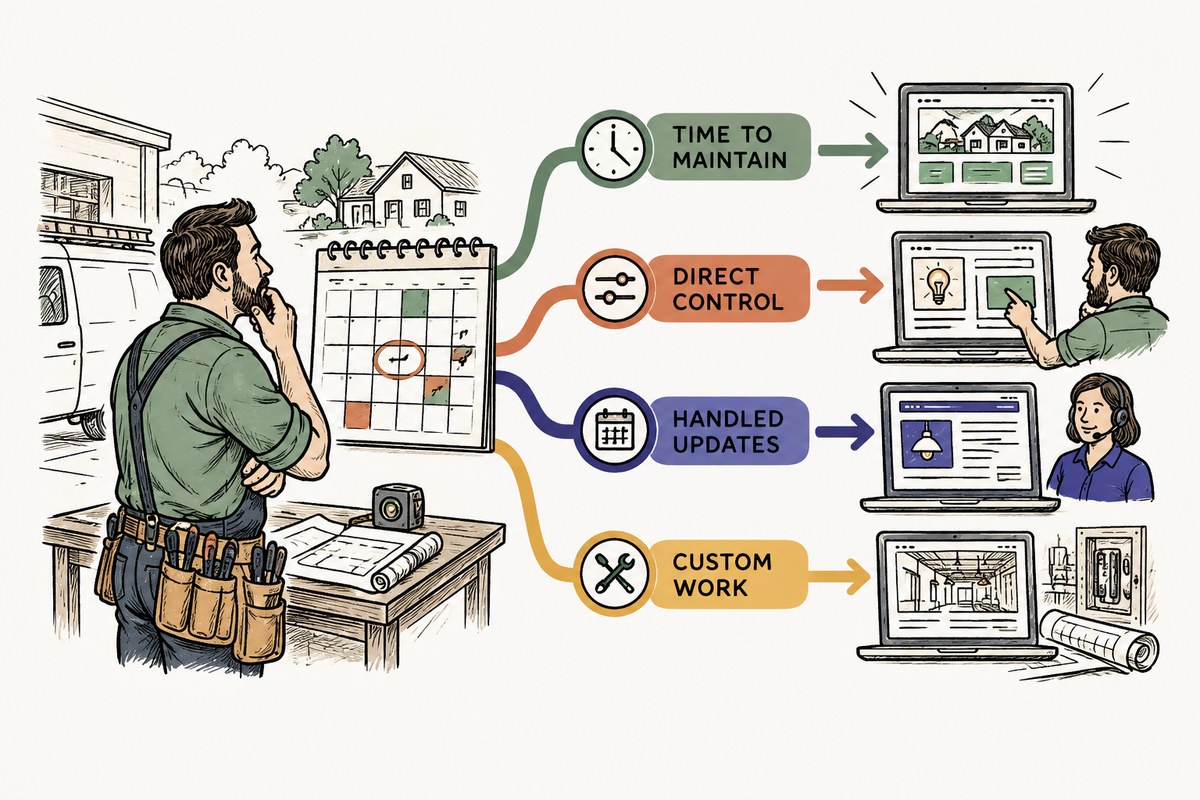
An agency fits when the website is part of a larger marketing or operational system. Look for custom strategy, integrations, content needs, or several stakeholders that justify a structured engagement. Ask how routine updates work as well as how the initial project works. A beautiful build does not answer the maintenance question by itself.
The broader decision framework is explained in Mirin's small business website approach.
Done for you fits when the owner wants the website current without turning updates into another job. It is especially worth considering when hours, service areas, services, and contact instructions matter but the owner does not want to manage a builder or coordinate a project team. Before buying, ask exactly what updates are handled and how urgent requests move.
Choose the website model that stays current
Choose DIY when control matters most and you have dependable time to maintain the site. Choose a freelancer when the project is defined and the relationship includes the help you actually need. Choose an agency when custom strategy, integrations, or a more involved marketing operation justify the extra process. Each can be the right answer when its owner is clear.
Choose done for you when the better trade is less direct control for less ongoing website work. That does not mean giving up responsibility for the facts. You still need to supply accurate licensing information, confirm what your authority requires, report changed hours and service areas, and review important updates. The service can handle the website, but your business remains the source of truth.
Do not choose Mirin if you want to design every page yourself, need a complex custom integration, or already have a capable web team that wants full control of the build. A DIY builder, freelancer, or agency may be more suitable. Choose the managed option only when having the website handled matches the way you want to run the business.
For the operating model behind that work, explore how Mirin plans, builds, and maintains websites.
If your decision points toward having the website handled, review Mirin's current website offering and pricing, then ask how your update process would work. Bring your service area, hours, emergency instructions, services, phone details, and licensing wording for verification with your licensing authority. The best choice is the one that leaves a named person responsible for the next important change.