
A chiropractor website can cost as little as $16 per month with a DIY builder, while Mirin’s done for you option is $199 per month. Freelancer and agency prices depend on the project scope and quote, so there is no supported universal figure for those options. The more useful question is not only what the website costs to launch. It is who will keep hours, services, provider details, contact information, and booking links accurate after launch.
That changes the decision for a busy practice owner. A low monthly price can be sensible when you have the time and confidence to build and maintain the website. A higher ongoing price can make sense when the real requirement is to have the website handled. The right choice depends on the work your practice is prepared to own.
Mirin's public service overview describes the handled website model behind this advice: read the overview.
The real choice is who owns updates
The public price points give you a useful starting line. DIY website builders start at $16 per month, while Mirin’s done for you option is $199 per month. Those figures are not equivalent packages, but they make the basic tradeoff visible: lower direct spend usually comes with more owner responsibility, while managed service costs more for less maintenance work.
Freelancers and agencies do not have one honest chiropractor specific price in this guide. Their fees depend on what the project includes, such as the number of pages, custom design, writing, integrations, revisions, and later support. A quote can be appropriate, but it needs to be read alongside the work that remains after launch.
The practical decision is therefore control and lower cash cost versus reduced effort and clearer ongoing responsibility. A practice with someone available to edit the website may value control. A practice that wants to focus on patients may value having updates handled. Neither preference is automatically better.
For more practical context, continue with the Mirin Journal's website strategy library.
Before comparing proposals, ask what happens when the practice changes its hours, adds a service, replaces a provider, or needs a booking link corrected. The launch price tells you what it costs to get started. The update answer tells you what ownership will feel like month after month.
Compare four website ownership models
A DIY builder is right when an owner or team member has the time, confidence, and willingness to build the website and maintain it. It offers direct control and a low starting price. It is less suitable when website work will repeatedly fall behind other responsibilities or when no one feels comfortable making changes.
A freelancer is right when the practice wants custom help for a defined project and has someone available to request, review, and pay for later changes. This can fit a focused redesign or a specific set of pages. The practice still needs a dependable relationship for work that sits outside the original scope.
An agency is right when the website needs a larger scope or broader strategy and the practice wants specialist support across areas such as design, content, or marketing planning. That extra breadth can be worthwhile for a complex project. It can also be more than a straightforward practice website requires.
When the decision reaches budget and scope, compare Mirin's current service options and pricing.
Done for you is right when the owner wants the website handled after launch rather than becoming its day to day publisher. Mirin's public price for that option is $199 per month. Ownership and cost patterns also show up across other local service websites, such as contractors, med spas, salons, dentists and fitness studios, and the Mirin Journal has a cost guide for each. Those guides are comparisons across businesses, not data about chiropractor pricing.
Update responsibility decides the cost
The deciding variable is who notices a needed change, requests it, pays for it, and publishes it. That is the difference between a price comparison and an ownership comparison. A website can be inexpensive to start and still require meaningful work from the owner every time the practice changes something important.
For a chiropractic practice, routine information can include opening hours, services, provider information, contact details, and booking links. The point is not that any particular practice has inaccurate information. The point is that every practice should know who is accountable when one of those details needs attention.
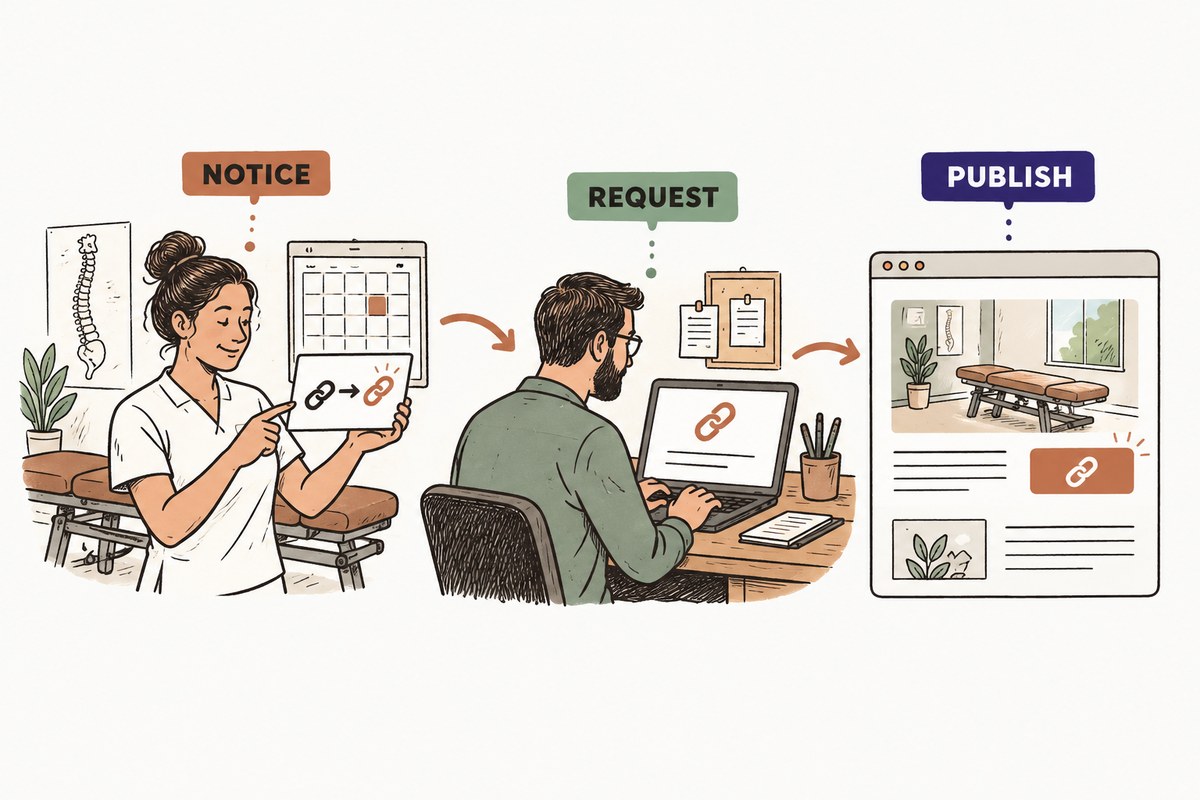
With DIY, the answer is usually the owner or an internal team member. With a freelancer or agency, the answer may be an outside partner, but the practice still needs to notice the change and communicate it. With done for you service, the central promise is that the website work is handled as part of the relationship.
For the operating model behind that work, explore how Mirin plans, builds, and maintains websites.
That makes the monthly or project price only one part of the cost. The other part is the time spent checking what changed, preparing instructions, reviewing drafts, and making sure the published website is current. A managed option trades some direct control for less maintenance work.
Choosing wrong creates maintenance debt
A DIY choice becomes a poor fit when the practice likes the low starting price but cannot reliably reserve time for website work. Changes may wait until someone remembers them. The issue is not that DIY is inherently weak. It is that ownership only works when someone genuinely owns the task.
A freelancer can be the wrong choice when the practice needs frequent changes but has no dependable process for requesting and reviewing them. Freelancers are often a good answer for defined custom work. They are less clearly suited to an owner who wants every small update handled without managing an outside relationship.
An agency can be excessive when the website is straightforward and the internal scope is small. Broader strategy and specialist support can be valuable when the project truly needs them. Paying for breadth that the practice will not use is different from investing in a project with genuine complexity.
Done for you can also be the wrong answer. An owner who wants full hands on control may prefer a builder. A practice with reliable internal support may not need an ongoing managed service. The correct model is the one whose responsibilities match the way the practice actually operates.
Find your side of the line
Start with time. If an owner or team member will genuinely maintain the website, a DIY builder may fit. If you need custom work for a defined project and can manage later requests, consider a freelancer. If the project needs broader expertise, an agency may be justified. If avoiding maintenance is the priority, look at done for you service.
Next, consider update frequency and control. Occasional changes can work well with a freelancer when the relationship is clear. Frequent changes need a dependable publishing process, whether that sits with an internal person, an agency, or a managed provider. Strong preferences for hands on control point away from a service designed to handle the work for you.

Then check budget certainty and project complexity. DIY has a clear public starting price of $16 per month, but the practice supplies the labor. Freelancer and agency costs require a scope and quote. Mirin’s done for you option is $199 per month, which is easier to assess when the value you want is ongoing handling rather than maximum control.
The broader decision framework is explained in Mirin's small business website approach.
If your answers point toward having Mirin handle the website, you can review the public pricing and service details before deciding. If your answers point elsewhere, choose that model plainly. A practice with the time to maintain its own website should not pay for a service it does not need, and a practice without that capacity should not pretend the labor is free.
Make the decision for your practice
Choose the least expensive model only when your practice can also own the work. A DIY builder can be a sensible answer when time, confidence, and accountability are already present. The $16 per month starting point matters because it keeps direct spend low, but it does not remove the responsibility to build and maintain the website.
Choose a freelancer when the work is custom but defined and someone at the practice can manage the relationship. Choose an agency when the project needs broader expertise or a larger scope. In both cases, ask what is included after launch, how later changes are requested, and whether ongoing work is quoted separately.
Choose done for you when the real requirement is a credible website without another maintenance job. Mirin’s public distinction is straightforward: DIY builders start at $16 per month, while its done for you option is $199 per month. The right comparison is what each price leaves your practice responsible for.
Before buying, confirm the scope, update responsibility, and ongoing charges in writing. Ask who keeps hours, services, provider details, contact information, and booking links current. If your practice wants control and can do the work, keep control. If it wants the website handled, pay for the ownership model that actually provides that.