
A fitness studio website typically costs about $16 to $50 a month with a DIY builder, $1,500 to $5,000 for a freelancer, $5,000 to $20,000 or more for an agency, or $199 a month for Mirin’s public Business plan. Those are broad market estimates, not universal quotes. The better question is who will keep your schedule, intro offer, membership details, booking path, coach information, and photos accurate after launch.
A gym website is not finished when the homepage looks polished. Class times change, coaches move on, new photos replace old ones, and an introductory offer expires. That makes ownership responsibility part of the cost. A cheaper build can be sensible when you want control and have time. A managed website can be sensible when you want a credible site without another maintenance job.
Mirin's public service overview describes the handled website model behind this advice: read the overview.
Why fitness website costs feel difficult
The starting price is easy to compare. The work after launch is not. A DIY builder may charge a modest monthly fee, while a freelancer or agency charges a larger one time project fee. A done for you website usually uses a recurring plan. Each price includes a different amount of owner responsibility, so the invoice alone does not tell you the real cost.
Fitness businesses also have more time sensitive website content than many local services. A reformer studio may need current class times and intro pricing. A boxing gym may need accurate coach profiles and contact routes. A small multi class gym may need membership explanations, photos of the space, and a clear way to ask about a first visit.
When the decision reaches budget and scope, compare Mirin's current service options and pricing.
For broad 2026 planning, use $16 to $50 a month for a DIY builder, $1,500 to $5,000 for a freelancer, and $5,000 to $20,000 or more for an agency. Scope, region, copywriting, photography, integrations, and revisions can move those figures substantially. Treat them as planning bands, not promises.
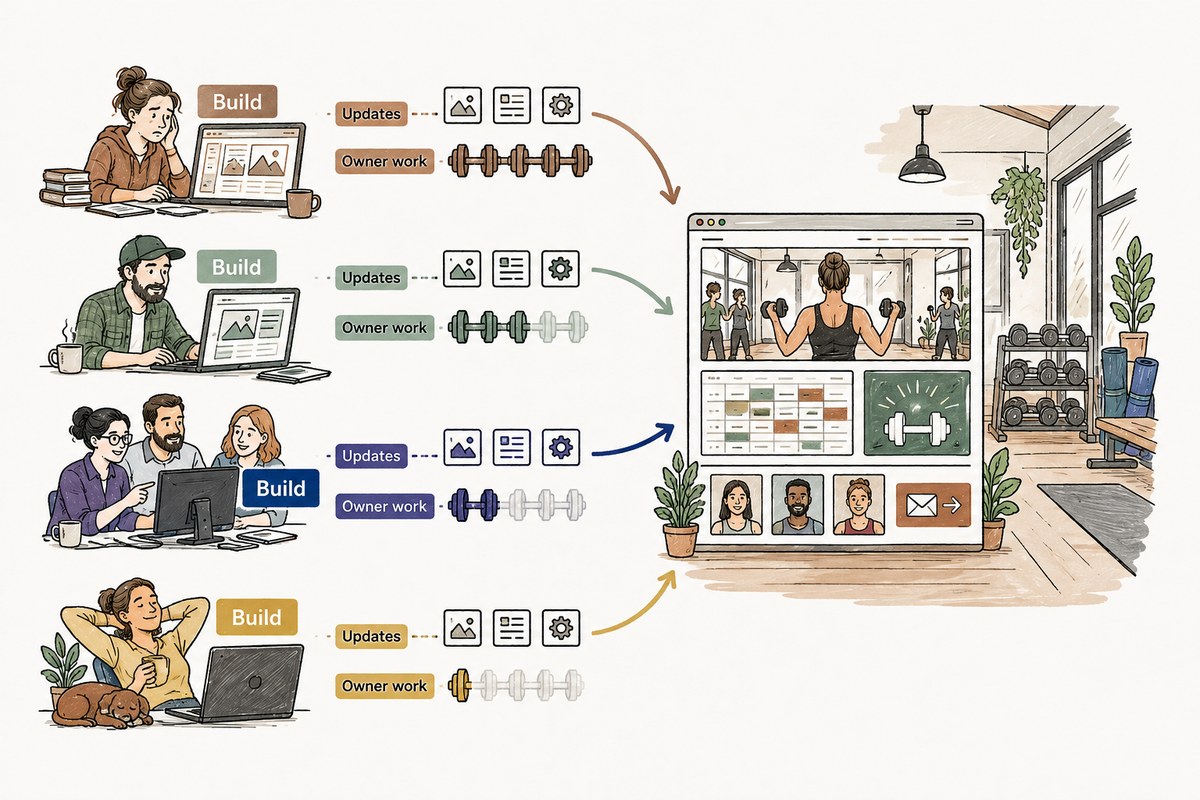
Mirin’s public Business plan is listed at $199 a month. That is a Mirin price, not a claim about every included fitness feature or third party fee. The useful comparison is whether the plan’s handled approach matches your need for control, complexity, and ongoing involvement.
What each website path typically includes
A DIY builder usually includes the software, hosting, templates, and tools to assemble pages yourself. You can create a home page, class or service pages, membership information, a contact route, and photo sections if the platform supports them. You remain responsible for choosing the structure, preparing the content, connecting any booking service, and making updates.
A freelancer usually provides a defined build around your real materials. The scope may cover page design, mobile layout, basic hosting setup, class schedule presentation, membership pages, contact or booking links, and placing supplied photos of the space and coaches. Ongoing changes may be separate work, so ask who updates schedules, offers, biographies, and images after handoff.
An agency can be the right answer when the website needs broader strategy, custom design, complex integrations, professional copy, photography coordination, or several decision makers. It may cover planning, build, hosting coordination, booking paths, membership content, and launch support. Confirm the maintenance arrangement because a polished agency launch does not automatically include continuing updates.
A done for you website is designed for an owner who wants the site handled rather than another dashboard to manage. Mirin publicly lists Business at $199 a month, but you should verify the current plan scope and discuss any booking service, photography, copywriting, or special functionality separately. This path is right when low owner involvement matters more than unlimited customization.
Who will own ongoing website updates
The deciding variable is not whether a website can display a schedule. It is who will notice a change, make the edit, check it on a phone, and keep the next step working. Before comparing vendors, name that person. It might be you, a studio manager, a freelancer on request, an agency retainer, or a managed website provider.
Write down the changes your business actually makes. Include class times, cancelled sessions, intro offers, membership terms, coach bios, staff photos, space photos, contact details, and booking links. Then ask how each option handles them. Is the change self serve, included, billed separately, or outside the agreement? A vague answer is an ownership cost.
A website build and continuing website work are different purchases. The build creates the pages and structure. Continuing work keeps those pages truthful as the business changes. Some owners genuinely prefer making every edit themselves. Others would rather send the information to someone else. Neither preference is more professional, but each points to a different model.
The broader decision framework is explained in Mirin's small business website approach.
Be careful with the word hosting. Hosting keeps a website available, but it does not necessarily mean someone is reviewing your timetable or replacing last season’s coach photos. Likewise, a booking link can exist without anyone checking whether it still leads to the right place. Separate technical availability from content responsibility.
What the wrong website choice costs
Choosing DIY because the monthly fee is low can turn the website into another recurring task. That is a reasonable trade when you enjoy control, can prepare content, and will actually maintain it. It becomes less attractive when schedule changes wait for a quiet afternoon or when nobody owns the old offer and outdated information.
Choosing a freelancer can work well for a defined launch, especially when a staff member owns updates afterward. The risk is assuming the original project fee covers future changes. A new page, revised membership explanation, new photo set, or booking adjustment may become a separate request with its own timing and price.
An agency can provide deeper planning and technical capability, which matters for a complex business or a website connected to several systems. The tradeoff can be a larger commitment and a more formal change process. If your studio needs a simple, current web presence, an agency may solve a bigger problem than you have.
For the operating model behind that work, explore how Mirin plans, builds, and maintains websites.
A managed website can reduce owner involvement, but it is not automatically the best answer. It may be the wrong fit if you need extensive custom functionality, full design control, or the ability to change every detail yourself. The cost of choosing badly is not only money. It is a mismatch between the way your business operates and the way the website must be maintained.
How to identify your best website fit
Start with update ownership. Choose DIY when you want direct control, feel comfortable with the builder, and have a dependable person who will maintain schedules, offers, coach details, photos, and contact paths. Choose a freelancer when the project is clearly defined and one internal person can handle ordinary changes after launch.
Choose an agency when your site requires substantial strategy, custom functionality, several integrations, coordinated content production, or a larger organization behind the decision. The higher project cost can be justified by complexity and coordination. It is less compelling when you mainly need a clear home page, service information, real photos, and one reliable first step.
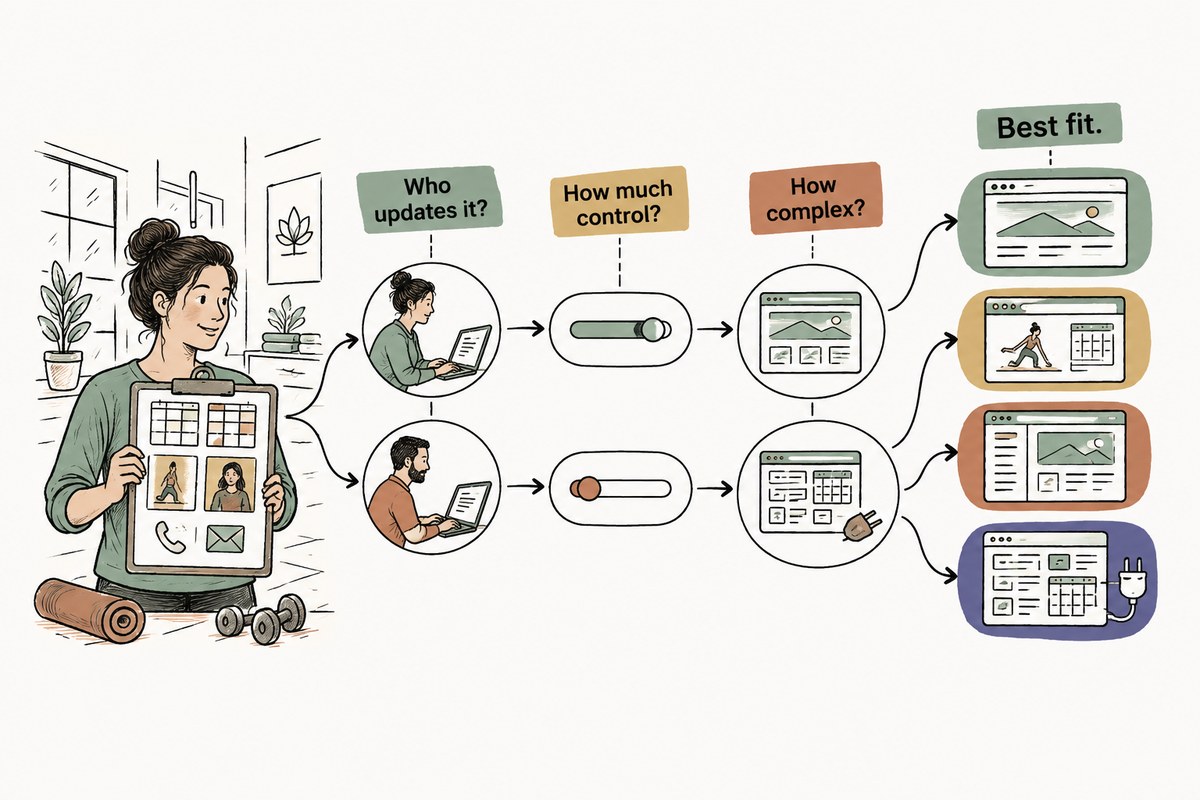
Choose a managed website when you have useful content but do not want website maintenance to become your job. This is especially relevant when the site should present the studio clearly while your team focuses on classes and members. Ask what the plan includes, what you provide, and which booking or membership systems remain separate.
If your answers point toward a handled website, request a free redesign from Mirin using your real studio information. You can see how the business could be presented before committing to the service. If you need full control or complex custom functionality, skip that step and choose a builder, freelancer, or agency that matches those requirements.
Choose the website path that fits
Choose DIY if control is the point and you can maintain the website consistently. The lower recurring price is useful when you are willing to own page edits, schedule changes, photos, offers, and links. Do not choose it merely because the first number looks small if nobody has accepted responsibility for the work afterward.
Choose a freelancer for a defined website build with an internal update owner. This can suit a boutique studio that has its content ready and wants a professional launch without agency level strategy. Put post launch changes, hosting, booking links, photo replacement, and response times in writing before the project begins.
Choose an agency when the business has unusual complexity, meaningful integration requirements, or a need for coordinated strategy and production. Choose a done for you website when the priority is a credible online presence without another maintenance job. Mirin’s public Business plan is $199 a month, subject to the current public plan details.
For more practical context, continue with the Mirin Journal's website strategy library.
Do not choose Mirin if you need extensive custom functionality, full design control, or want to manage every change yourself. Choose Mirin when reducing owner responsibility is the more important decision. The right website cost is the one that fits both your budget pattern and the person who will keep the next class, offer, photo, and contact path current.