
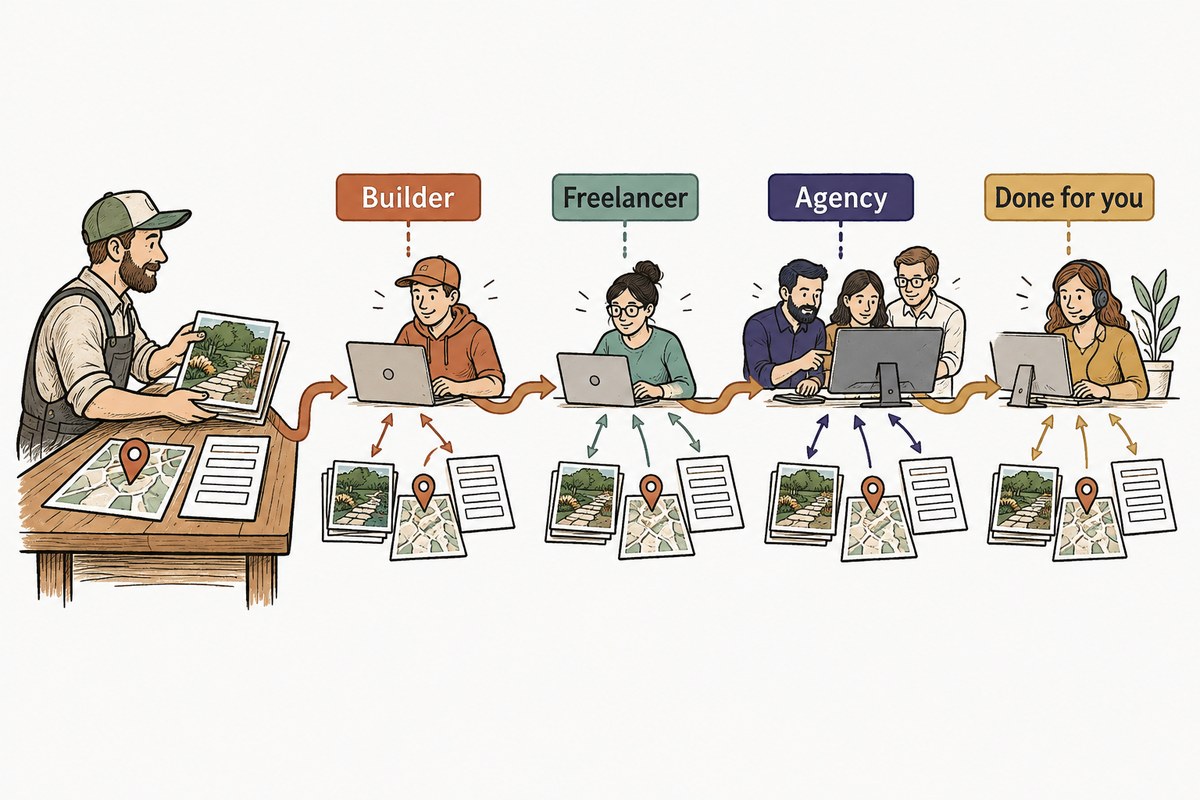
A landscaping website costs $1,800 to $8,500 to build in 2026, and $85 to $340 a month to keep running, according to Project Cost Estimator's Landscaping Website Cost in 2026. A solo operator lands at $1,800 to $3,500, a mid sized crew at $3,500 to $6,500, and a multi location firm at $6,500 to $8,500 and up. The four routes are a website builder, a freelancer, an agency, and a done for you website subscription. The price is only half the decision. The other half is who keeps the project photos, town pages and seasonal quote forms current once the season is in full swing.
Landscaping is visual, local and seasonal, so its website carries more ongoing work than a static brochure. Photos prove the work you want to sell now. Town pages must match the territory your crews actually cover. The quote form should ask about the season you are selling, from spring cleanups to mowing, planting, fall cleanup or snow work. That upkeep is what turns a low launch price into an expensive year.
Every number below comes from two named, dated sources: Project Cost Estimator's Landscaping Website Cost in 2026, and the landscaping price table Zarla checked on 30 September 2026. Where a source is silent, this guide says so instead of guessing. If your business is not landscaping at all, the small business website cost guide prices the same routes in general.
Landscaping Website Costs By Route
Do it yourself on a website builder is the lowest entry point and the most owner work. Project Cost Estimator prices a Squarespace or Wix build at $800 to $2,500 when you write the copy yourself, with the subscription at $23 to $49 a month. It is fine for a solo operator serving one or two towns. The same source puts real do it yourself time at 30 to 50 hours, warns that you outgrow a builder once you pass about five trucks, and says to plan on a rebuild within 2 to 3 years if you grow.
A freelancer gives you a tailored build, and usually leaves publishing to you unless the agreement says otherwise. Project Cost Estimator puts a typical mid sized landscaping site at $4,500 to $6,000 with a freelancer, at generalist rates of $25 to $75 an hour or senior rates of $80 to $150 an hour. Before you sign, ask what happens when you send a new project photo, add a town, or need the quote form changed.
An agency adds strategy and production. The same source puts a typical mid sized site at $9,500 to $13,000 with an agency, and a local landscaping agency engagement at $4,500 to $15,000 typical. Zarla's checked table records one landscaping marketing agency saying to expect $15,000 to $25,000 for a high quality custom site. An agency price includes people, so compare the stated scope with the work your business actually needs.
A done for you subscription trades control for continued handling, and it is the one route with real published prices. Checked on 30 September 2026, web designers who publish prices for landscaping and lawn care sites charge $0 to $997 up front and $129 to $599 a month, some on 6, 12 or 24 month contracts. One lawn care web design company charges nothing to set up and $499 a month with unlimited monthly changes. A home services web agency runs from $195 a month on a 24 month plan, with hosting, maintenance and updates included for 2 years. A lawn care web design studio charges $199 or $299 to set up, then $199 to $599 a month with a 12 month minimum on the smaller plan. These are individual published prices, not a market average.
Then price the year, not just the launch. Project Cost Estimator puts monthly running costs for a landscaping site at $85 to $340 for hosting, plugins, email tools, call tracking and maintenance, and gives a budget rule of 12 to 18 percent of the build cost per year. A $5,000 site means $600 to $900 a year at minimum.
When the decision reaches budget and scope, compare Mirin's current service options and pricing.
So what does a landscaping company pay? Do it yourself runs $800 to $2,500 plus your own time. A freelancer runs $4,500 to $6,000 for a typical mid sized site. An agency runs $9,500 to $13,000. A subscription runs $129 to $599 a month against a stated scope of updates. The route decides the work as much as the price, and the sections that follow help you pick one you can keep up.
Check Your Website Workload First
You can diagnose the right route in five minutes by looking at the work your business already creates. Open your current site and ask when the project photos were last replaced. Then check your service area pages against the towns you currently serve. Finally, submit or inspect each quote form and compare its questions with today’s services.
Mark the photo question yes if you regularly finish work that deserves to be shown. A lawn transformation, retaining wall, planting project, or maintenance property can make an old gallery feel stale when it is your only proof. Mark it no if your work rarely changes or if the existing images remain accurate and useful.
Check your town pages against your calendar, not your memory. If crews now travel to a town that the site does not mention, or the site still names an area you no longer serve, someone needs to make that correction. A service area page is useful only when it reflects the actual territory you are prepared to cover.
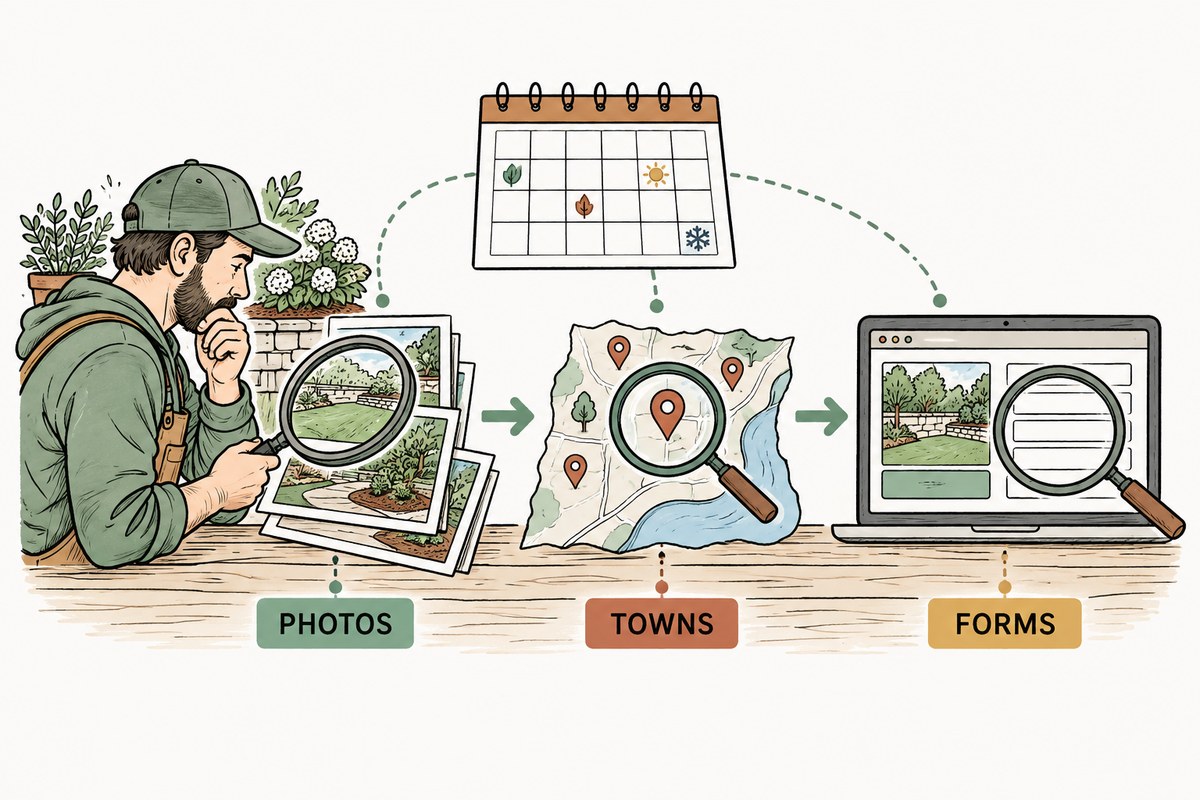
Look at your services by season. If spring cleanup, irrigation, planting, mowing, fall cleanup, or winter work changes what you want to sell, compare that list with the homepage, service pages, and forms. A route becomes harder to manage when the business changes but the website keeps presenting last season’s offer.
Now identify the person who would publish each change. Do not write the owner’s name automatically. Ask who has access, who knows which photos are approved, who can check town coverage, and who can test the form after a change. If no one has a clear answer, the website already has an ownership problem.
Technology dislike is not the diagnosis. An owner who dislikes dashboards can still be well served by a builder if someone else reliably publishes updates. An owner who enjoys editing can still outgrow a builder when several people need to coordinate pages, forms, photos, and seasonal services. The deciding variable is unfinished update work.
Seasonal Landscaping Sites Need Updates
A landscaping site changes because the evidence of the work changes. A static local business may keep the same core offer visible for longer. Landscaping businesses often need the site to show different kinds of work across the year, while the photos that make the work believable come from jobs completed in changing conditions.
Project photos need attention for a practical reason: they prove the kind of work you want to sell now. A gallery dominated by old mowing images does not explain a current planting service. A page showing only summer lawns may undersell fall cleanup. The cost question is separate from the reason: the source price tells you what a route costs, while ownership tells you who performs the update.
Service area pages need attention because coverage is a business decision. A town page should not promise work outside the territory you can serve, and a new territory should not remain invisible because nobody added it. The upkeep cost is not automatically a separate published charge. First establish whether your chosen route includes the person and process that make the change.
Quote forms need attention because the questions should match the current job. A form for lawn mowing may ask for property size and frequency. A form for a retaining wall or planting project may need different information. If the seasonal form no longer fits the work, the issue is not visual polish. It is a mismatch between the request and the service.
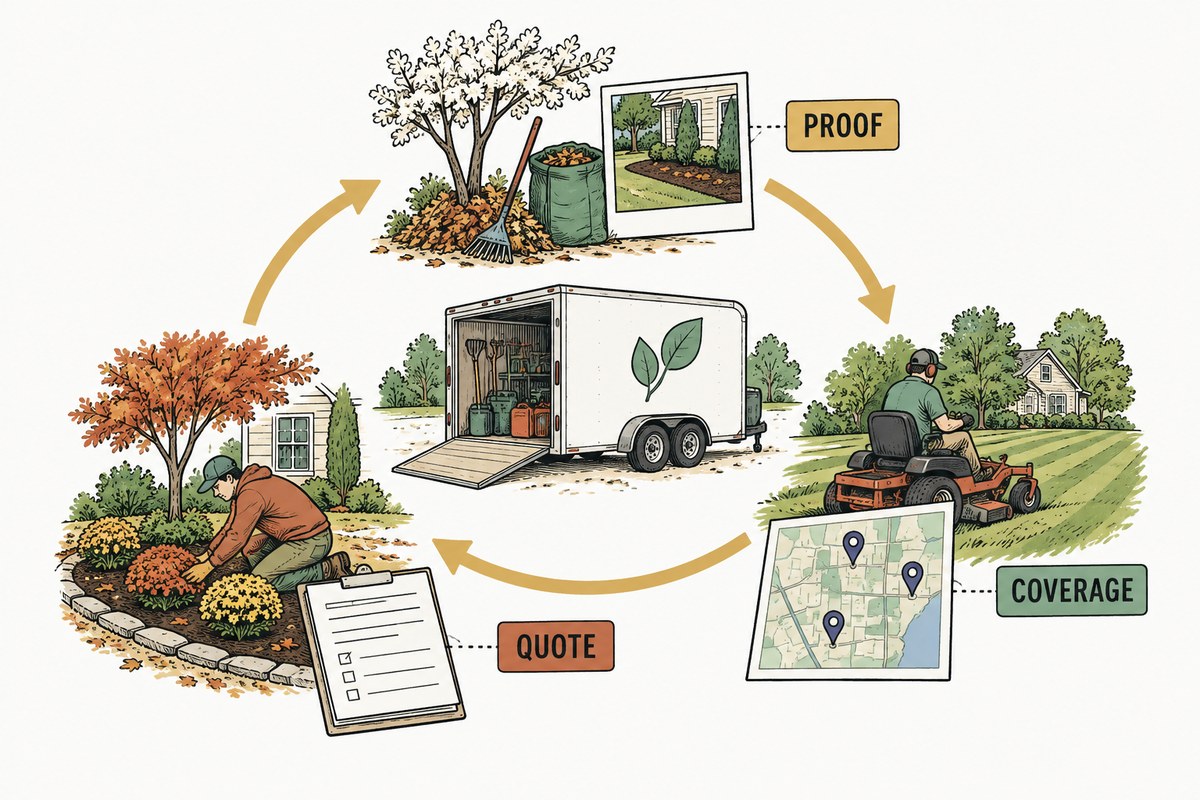
These three updates have different reasons, even when they happen on the same website. Photos keep proof relevant. Town pages keep coverage accurate. Forms keep the first conversation useful. A route that includes design but leaves every update with you may be affordable at launch and expensive in attention when the season is full.
Those updates can be priced, within limits. At the $75 an hour senior freelancer rate Project Cost Estimator uses, a before and after gallery of 20 or more projects adds $450 to $675, a branching quote form adds $375 to $600, seasonal conditional logic adds $400 to $900, and 15 service area landing pages add $750 to $1,050. The same source says to multiply those by 2.0 to 2.5 for agency work. Use them to judge an itemized quote, and use the monthly figures above for the recurring side rather than inventing an annual figure of your own.
Every local service business runs this problem in its own shape. The contractor website cost guide prices the upkeep question for a general trade, and the salon website cost guide and the med spa website cost guide show how it looks for appointment businesses, and the dental website cost guide prices the same routes for a dental practice.
Choose The Lowest Cost Route
Start with a website builder when the lowest stated recurring route matters and someone at the business can publish changes. This works best when your page structure is clear, your service area is manageable, and the person responsible can update photos, town pages, and seasonal forms without waiting for a developer or outside vendor.
Choose a freelancer when the site needs a tailored look or structure that you do not want to assemble yourself, and you can own updates after launch. Before agreeing, ask what happens when you send a new project photo, add a town, remove a service, or need a new quote form. A finished build does not answer those questions.
Choose an agency when the project needs broader strategy, content planning, or a larger build than a simple local site. At $9,500 to $13,000 for a typical mid sized site, the extra spend should buy named answers: who writes the pages, who photographs the work, and who handles seasonal publishing after launch.
Choose a done for you website subscription when predictable handling matters more than full control. This route can fit an owner who knows updates will otherwise wait until the busy season has passed. Ask what the subscription handles, how requests are submitted, and whether photos, town pages, forms, and service changes are within the ongoing work.
Project Cost Estimator draws one more line worth knowing before you spend. A lead gen site runs $2,500 to $4,500 and is what 90% of landscapers actually need. An aesthetic showcase runs $6,000 to $10,000 and up and pays for itself only on high ticket design work. Its rule of thumb: if your average ticket is under $3,000, build the lead gen site.
Your yearly upkeep checklist is short. Review project photos and remove proof that no longer represents current work. Check every town page against the territory your crews serve. Review seasonal service pages. Test each quote form. Confirm phone, email, hours, and contact details. Remove services you no longer want to promote.
The broader decision framework is explained in Mirin's small business website approach.
Then match each item to a person, not a vague promise. A builder owner might publish everything. A freelancer might make occasional changes under a separate agreement. An agency might coordinate content as part of a larger engagement. A done for you provider might handle the recurring edits. The contract or plan should make that boundary plain.
Know When DIY Stops Working
Self service stops being a sensible bargain when updates are consistently delayed. Look at the current site rather than your intention. If finished projects sit in a camera roll, new towns are missing, or a seasonal form still asks for last season’s work, the route is failing at the ownership task that made it attractive.
Get outside help when the business serves many towns and each page needs careful accuracy. More locations create more opportunities for stale coverage, inconsistent service descriptions, and contact details that do not match. The issue is not that a large number is automatically expensive. The issue is that every page still needs an owner and a check.
Get help when you need several service or quote flows. A simple contact form may be enough for one offer. Several services can require different questions, routing, and follow up. Ask whether the provider will maintain those distinctions or merely give you access to edit them yourself.
A substantial rebuild is another boundary. If the current site cannot represent the work you sell, the towns you serve, or the way you want people to request a quote, repeated small edits may hide the larger problem. Ask for a clear rebuild scope before paying for scattered fixes that do not resolve the structure.
No one should be expected to maintain a critical site safely during the busiest part of the season without a workable process. Before choosing a freelancer, ask who owns ordinary updates after launch and what each request costs. Before choosing an agency, ask what ongoing content work is included. Before choosing a subscription, ask what changes are covered and how quickly requests are handled.
The price decision is complete only when the ownership decision is complete. A builder can be the right low cost route when publishing is genuinely covered. A freelancer or agency can be right when the build needs tailored work and the business can manage the rest. A done for you route can be right when seasonal accuracy needs a named outside owner. Ask that question before you compare invoices.