A therapist website has one job before anyone books. Make a nervous person feel safe enough to take the next step. Everything else on the page is in service of that, or in the way of it.
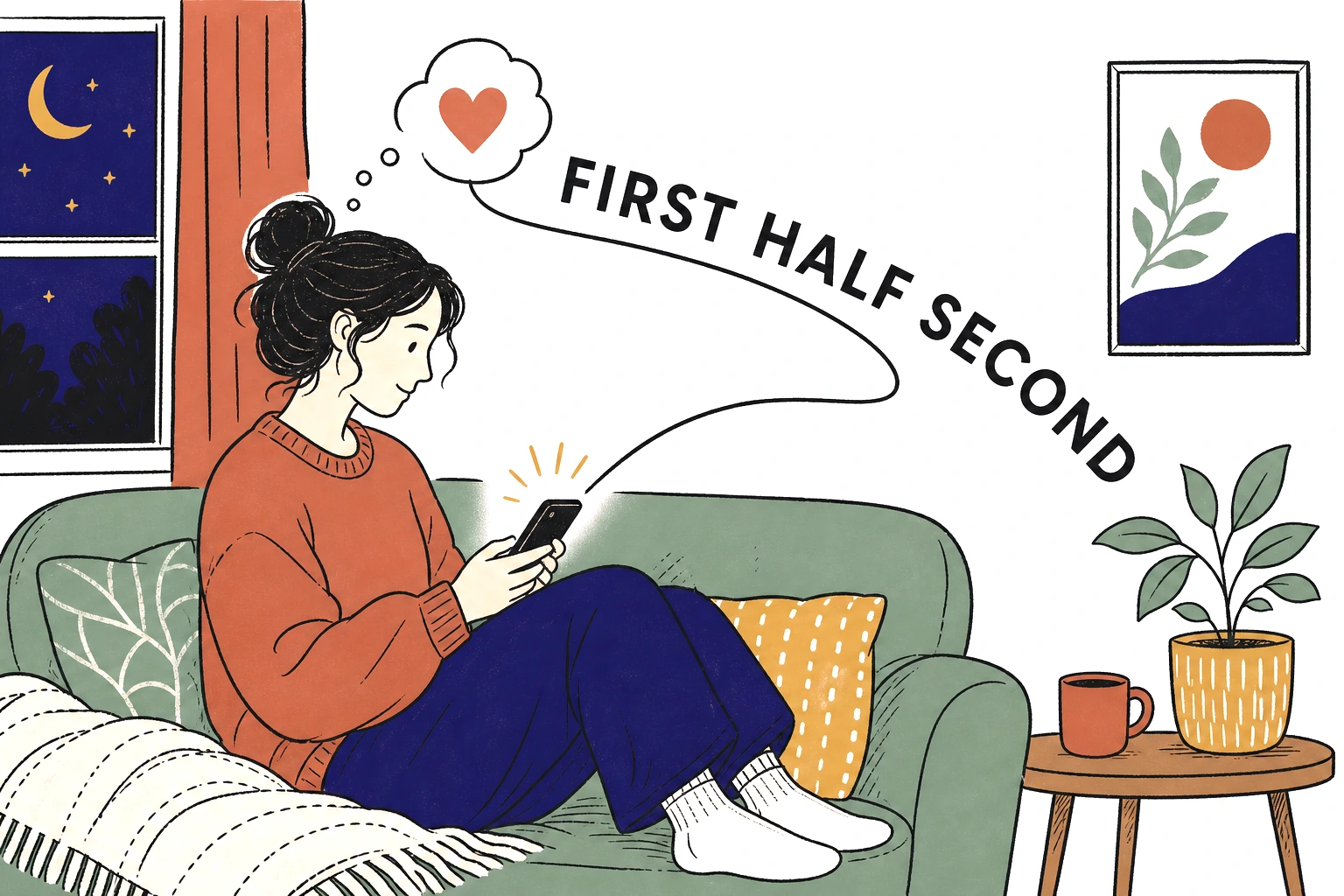
The person on your site at ten at night is not comparing modalities. They are working up the nerve. They want to know one small thing before they act. Are you the kind of person I could say this out loud to.
Good therapist website design answers that in the first few seconds, then makes booking easy enough to do while the nerve still holds.
This is not a design opinion. It is how first impressions actually form. Research in Behaviour and Information Technology found people judge a website in about fifty milliseconds, faster than a conscious thought. And Stanford web credibility research found that when people size up whether an organization can be trusted, the design look of the site is what they mention most.
Curious how your own site reads in that first half second? Run it through the free Mirin scorecard. Sixty seconds, no signup.
The half second before they read a word
What a therapist website has to do
Before anything else, the site has to make one anxious person feel safe enough to act.
A prospective client is not a lead in a funnel. They are someone who has been meaning to do this for months. They found you, opened the page, and now a small voice is looking for a reason to close the tab and try again some other week.
Your homepage either quiets that voice or feeds it.
Most therapist sites feed it by accident. A wall of credentials before a single warm sentence. A stock photo that could be any office anywhere. A booking link three scrolls down, past the full history of the practice. Nothing is wrong on the page. It just never answers the only question the visitor came with.
The fix is not more content. It is a decision about who this page is for and what you want them to do next. Say that plainly, near the top, in your own voice. That single act of design does more than any color palette.
Design is the first thing a client judges
People decide whether to trust a practice from how its website looks, before they read the words.
This feels unfair, and it is true anyway. Stanford's Persuasive Technology Lab studied how thousands of people evaluate credibility online. B.J. Fogg, who led the work, wrote that "when it comes to Web sites, looking good is often interpreted as being credible." The visual design was mentioned more than credentials, more than content, more than anything else.
For a therapist, that stat lands harder than for most businesses. You are not selling a product a client can inspect. You are asking them to be vulnerable with a stranger. The site is the only evidence they have before the first session, so it carries the whole weight of the first impression.
What a client reads as safe

Notice what does the work in a page that feels safe. A real photo of the actual therapist, not a model. One sentence that says who you help, in words a client would use, not a diagnosis code. Enough calm on the page that the eye is not fighting to find the point.
Across the therapist homepages we have rebuilt at Mirin, the single change that moved bookings the most was the least glamorous one. We moved the consult action above the fold and cut the about-me essay down to two sentences. The credentials did not disappear. They moved below the decision, where a client who already feels safe goes looking for reassurance, not where an anxious one gets buried.
Put the page in client order
A client reads a homepage in the order they would think, not the order you would introduce yourself.
First, is this person for someone like me. Then, do I feel something honest here. Then, what do I actually do to start.
Most therapist homepages are arranged in the opposite order. Full credentials and training history first, a long practice philosophy second, and the one thing the visitor needs, a way to reach out, tucked at the very bottom like a footnote.
A homepage in client order
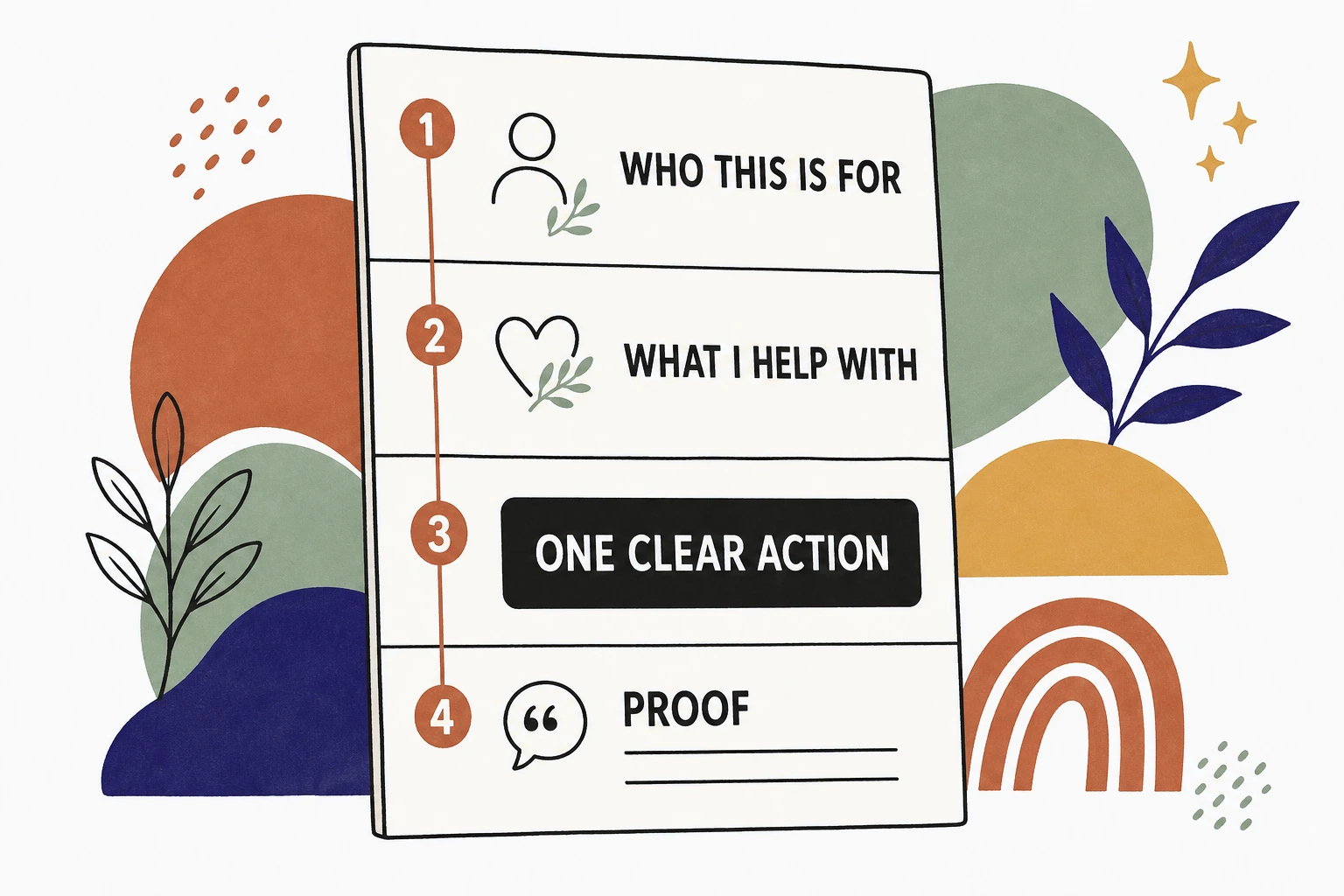
Rearranged around the client, the page gets simpler, not busier. One line naming who you help. One honest paragraph about what the work feels like. One clear action to start. Then the proof a hesitant person wants once they are already leaning in.
Restraint is the whole skill here. You do not need every specialty, every certification, and every philosophy on the first screen. You need the right client to think, this one gets me, and to see exactly what to do about it.
See your practice arranged in client order.
Send Mirin your current site. We will shape a preview around the one action a nervous client needs to see, before you pay for anything.
Request a website preview- Send your site
- We shape a preview
- You review it
- You decide
The booking step has to be one tap away
Most people who reach a therapist site are on a phone, and their patience is thin.
They are not at a desk with time to research. They are in bed, or in a parked car, or in a quiet minute between other things, holding a small screen and a large feeling. If the way to reach you is a tiny link, or a contact form with nine fields, or a phone number with no other option, the nerve passes before the action does.
Speed is part of this too. Google's mobile research found that as page load time goes from one second to three, the chance a visitor leaves rises sharply, and most journeys that convert happen on fast pages. A slow, heavy therapist homepage loses the exact person who finally worked up the courage to look.
The action within a thumb's reach
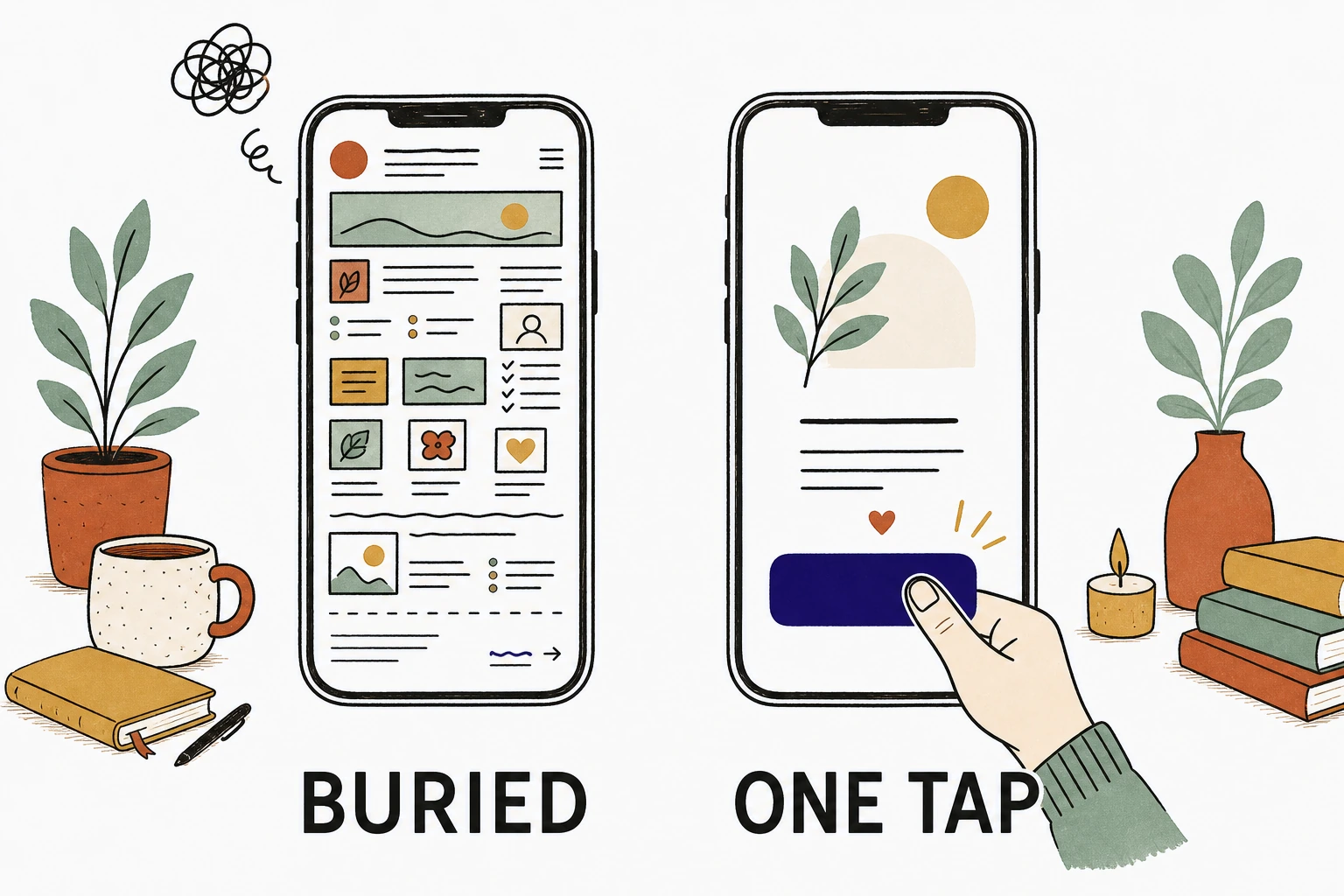
Design the booking step for the worst moment, not the best one. One obvious button that says what happens next, in plain words. A free consult, or a first message, not a demand to commit to weekly therapy on the first tap. Ask for the smallest brave thing, and make it reachable without a scroll.
Design you can actually keep current
The best therapist website design in the world fails if the practice cannot keep it true.
You already know what the site should say. That was never the hard part. The hard part is Tuesday.
Your fees change, but the page still lists last year's. You stop taking a certain insurance, but the site still promises it, and now the intake call starts with an apology. You add a specialty you love, and it never makes it onto the page at all. The public version of your practice drifts away from the real one, quietly, a little more each month.
The weekly update loop
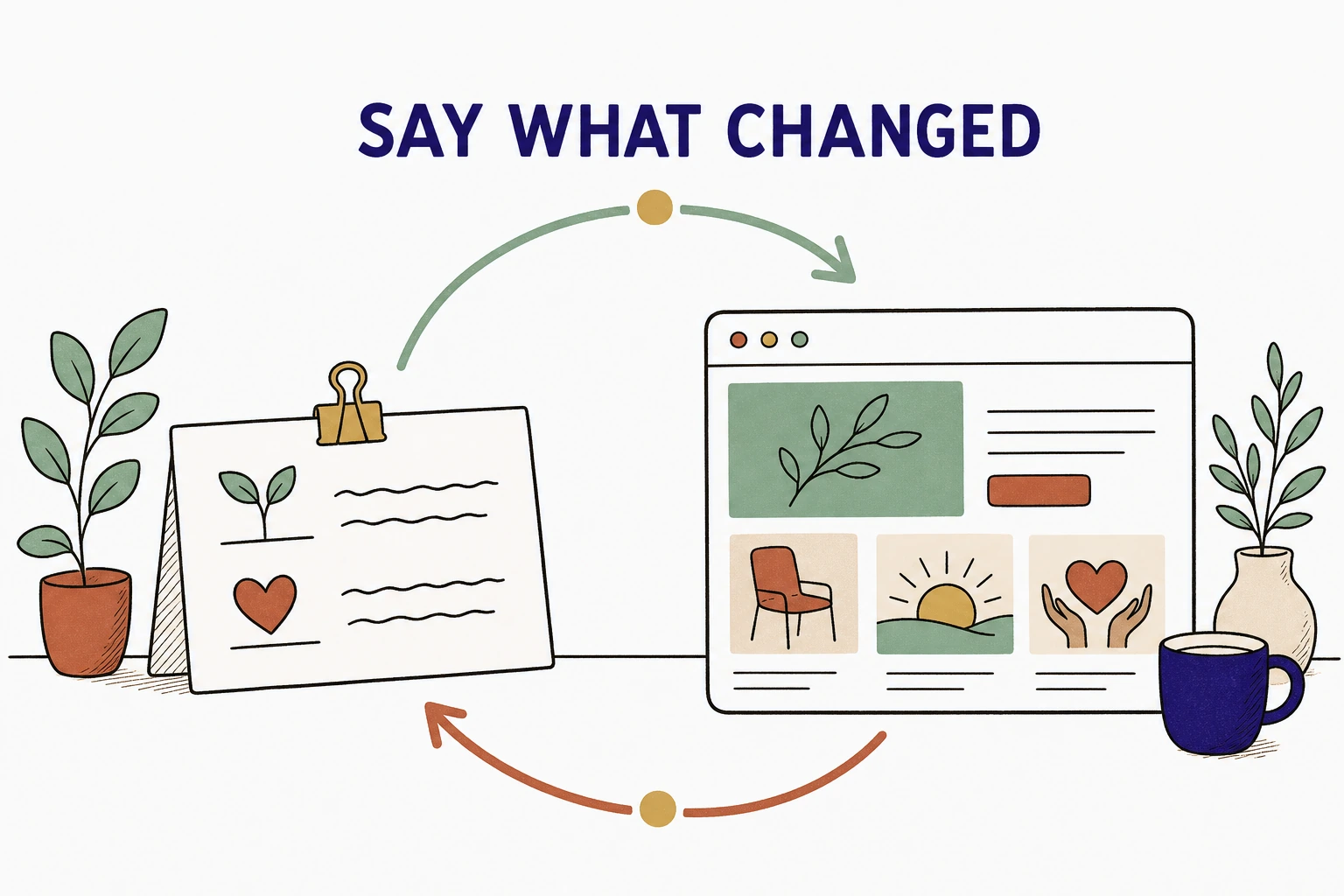
A stale site is not a small problem for a therapist. You are asking for trust, and a page that contradicts the phone call spends it. Be suspicious of any answer that hands you another dashboard to learn. A dashboard is control, which is just another word for a second job you did not want.
The better trade is a handled loop. You say what changed in plain language, someone updates the page, you approve it. You keep every clinical and business decision. You never become the person who also maintains a website at nine on a Sunday.
Where Mirin fits
Mirin runs on a simple split. You keep the decisions. We operate the website.
You bring what no template can guess. Who you help, what the work actually feels like, which words a client uses when they finally reach out, what you can honestly promise. Mirin turns that into a preview you can react to, a homepage in client order, and a publishing path that never becomes your second job.
The work is judgment, not decoration. Which sentence goes above the fold. What the one obvious action should be. Which promise has to come down this week. Get those right and your website stops being a brochure you feel guilty about and starts being the calm front door your practice deserves.
Turn a hesitant visitor into a booked consult.
Send your current site and the words your clients use when they reach out. We will shape a preview around the next step that matters.
Get my preview- The words clients use
- A preview shaped around them
- Review, ask for changes
- Live in days
The repeatable rule for therapist website design is small. If a nervous person cannot feel safe and see the next step in the first few seconds, the design has failed, no matter how polished it looks. Build for that one moment, and the rest of the page finally has a job worth doing. If budget is your next question, what a therapist website costs is laid out plainly, and therapist website examples show the client-order idea on real pages. The Mirin Journal keeps these field lessons together.