If you are shopping Wix alternatives for your small business, here is the honest answer. Wix is a genuinely good builder, and for a lot of owners it is the right call. You outgrow it when the site becomes one more dashboard you are supposed to log into and keep current, on top of running the business.
So the real question is not which builder wins on features. It is whether you want to operate a website at all.
Your website has one job. Someone found you, usually on their phone, and they are deciding in seconds whether to call, book, or move on. Most of a builder's feature list is noise against that moment. What matters is whether the site is clear, fast, and current the day they land on it.
Curious how your current site handles that moment? Run it through the free Mirin scorecard. Sixty seconds, no signup.
Where Wix fits and where it strains

Where Wix is genuinely good
Wix is a strong, flexible builder, and pretending otherwise would waste your time. For an owner who wants to get a real site live this weekend, it is hard to beat.
The scale alone tells you it works for a lot of people. Wix reports serving more than 200 million users worldwide, and that is not an accident. The editor is powerful, the templates are broad, and you can drag almost anything anywhere.
Being findable at all is the baseline, and a Wix site clears it. Seventy six percent of consumers check a business online before ever contacting it in person. A clean Wix site beats no site, every time, and it beats a site you are too embarrassed to share.
So if you enjoy tinkering, your business changes slowly, and you like having every knob within reach, you may not need an alternative at all. Be honest about that before you switch anything. The best builder is the one you will actually keep up.
Where the dashboard becomes the problem
The strain begins the day the site needs to change and you are the only one who can change it.
That is the quiet cost of every drag and drop builder. The power to edit anything is also the obligation to edit everything. New hours, a new service, a seasonal offer, a price that moved. Each one is a small login, a small hunt through the editor, a small task that waits for time you do not have.
The problem is Tuesday. Not the big redesign you keep meaning to do. The tiny update you know you should make and keep not making, because the shop is busy and the editor is one more tab.
The site that quietly becomes a second job

Speed is the second pressure point, and it is easy to miss. Feature heavy Wix sites can get slow, and slow is expensive on mobile, where most of your visitors are. Google's research found that 53 percent of mobile visits are abandoned if a page takes longer than three seconds to load, and the probability of a bounce climbs 32 percent as load time goes from one second to three.
Attention is the backdrop to all of it. Usability research is blunt about how little patience visitors have. As Jakob Nielsen of the Nielsen Norman Group put it, users often leave a web page within ten to twenty seconds. A cluttered page does not get read. It gets skipped.
None of these are Wix flaws exactly. They are the cost of a general builder aimed at everyone, where you supply the labor. A busy owner pays that cost in a site that slowly stops matching the business.
The honest fit table
Here is a plain look at the real alternatives, without pretending any one of them wins on every row.
| Option | Best when | The catch |
|---|---|---|
| Wix | You want maximum flexibility and enjoy editing the site yourself. | You become the webmaster. Every change waits on you finding the time. |
| Squarespace | You want the prettiest templates and a cleaner editor to work in. | Same self serve trade. Still your job to keep it current. |
| WordPress | You want total control and have a developer or the patience to be one. | Plugins, updates, and security become an ongoing chore. |
| A local agency | You want it fully handled and have the budget for retainer work. | Small changes cost money and wait in a queue. Slow for the little stuff. |
| Mirin | You want the site handled and current without ever opening an editor. | You give up the dashboard on purpose. You keep the decisions, we operate the site. |
Notice there is no villain in that table. Wix is the most flexible canvas. Squarespace is the prettiest one. WordPress is the most powerful if maintenance does not scare you. An agency is fully handled if you can afford the retainer. They are different trades, not better or worse in a vacuum.
The pattern is the split down the middle. Everything above Mirin either hands you a system to operate or bills you per change. The question is which one fits how you actually spend your day.
See your homepage rebuilt, before you switch anything.
Send Mirin your current site. We will shape a preview around the one action you most want a visitor to take, so you can compare it to your Wix site side by side.
Request a website preview- Send your site
- We shape a preview
- You review it
- You decide
Most owners outgrow Wix on the labor, not the looks
Very few businesses leave Wix because it looks bad. They leave because the site quietly stopped being true.
You changed your hours in December and the site still shows the old ones in March. You dropped a service but it still headlines a page. You ran a promotion that went live two weeks late because that was the first evening you had a spare hour. Nobody meant for any of it to happen. The editor just sat there, waiting for time between customers.
This is the trap of a self serve builder for someone whose actual job is not websites. The tool is not too weak. It is too dependent on you. Every strength of the editor is also a task with your name on it.
The update loop a busy owner can actually keep
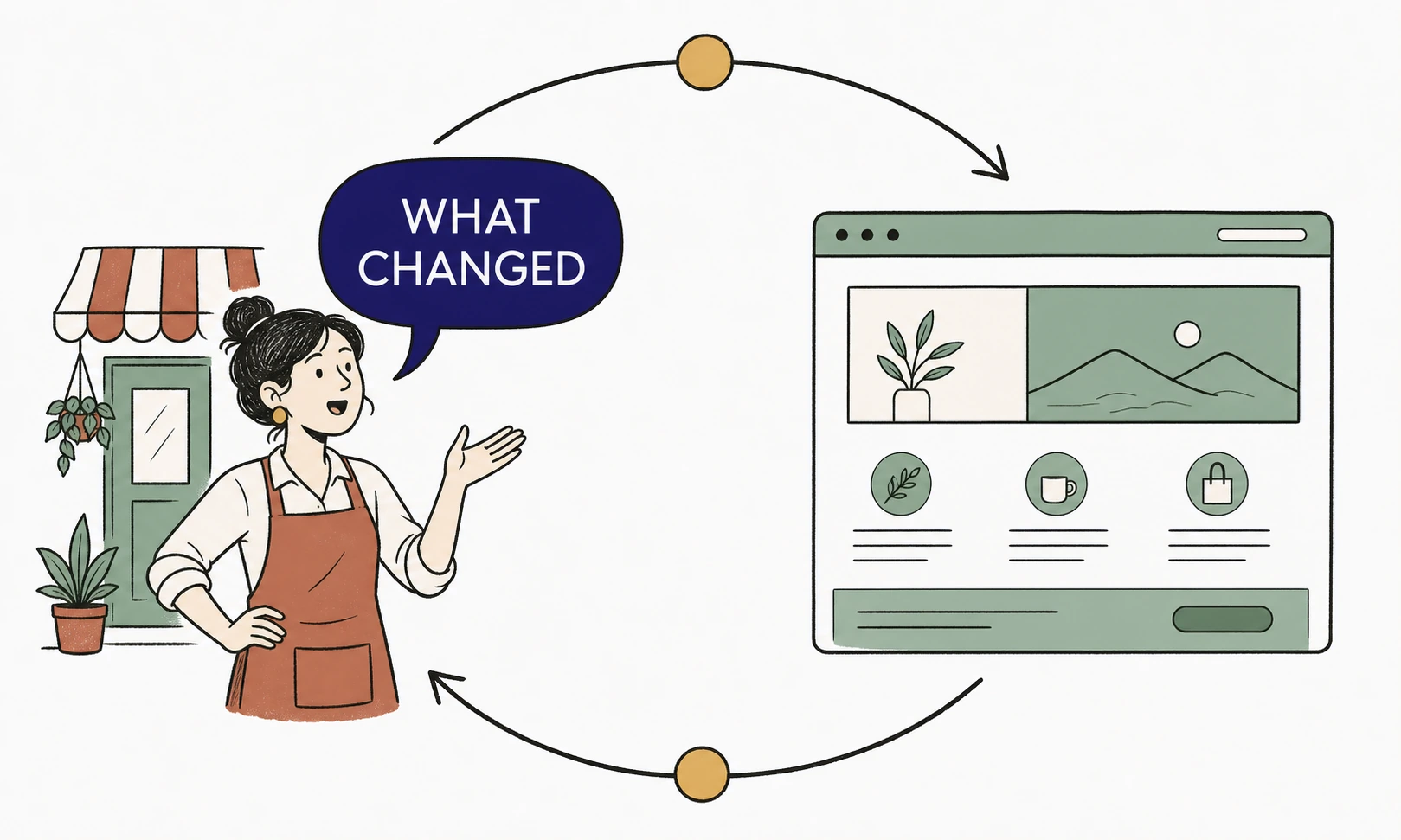
Across the small business homepages we rebuilt at Mirin this year, the most common single fix was not design. It was removing the owner as the bottleneck. We pulled the one action that mattered, call, book, or buy, out of a crowded layout and made it the spine of the page, then tied every future change to a plain language request instead of an editor session. The photos were usually fine. The path to keeping the site true was the thing that had broken.
That is the difference between a builder and an operated site. A builder gives you a canvas and waits for you. An operated site keeps the promise current whether or not you had a free evening.
Audit your Wix site in five minutes
Before you switch anything, judge your current site the way a first time visitor does.
Open it on your phone. Pretend you just found the business and you are mildly interested. Then walk the trail below and mark where you hesitate or where the information is out of date.
The five minute visitor audit
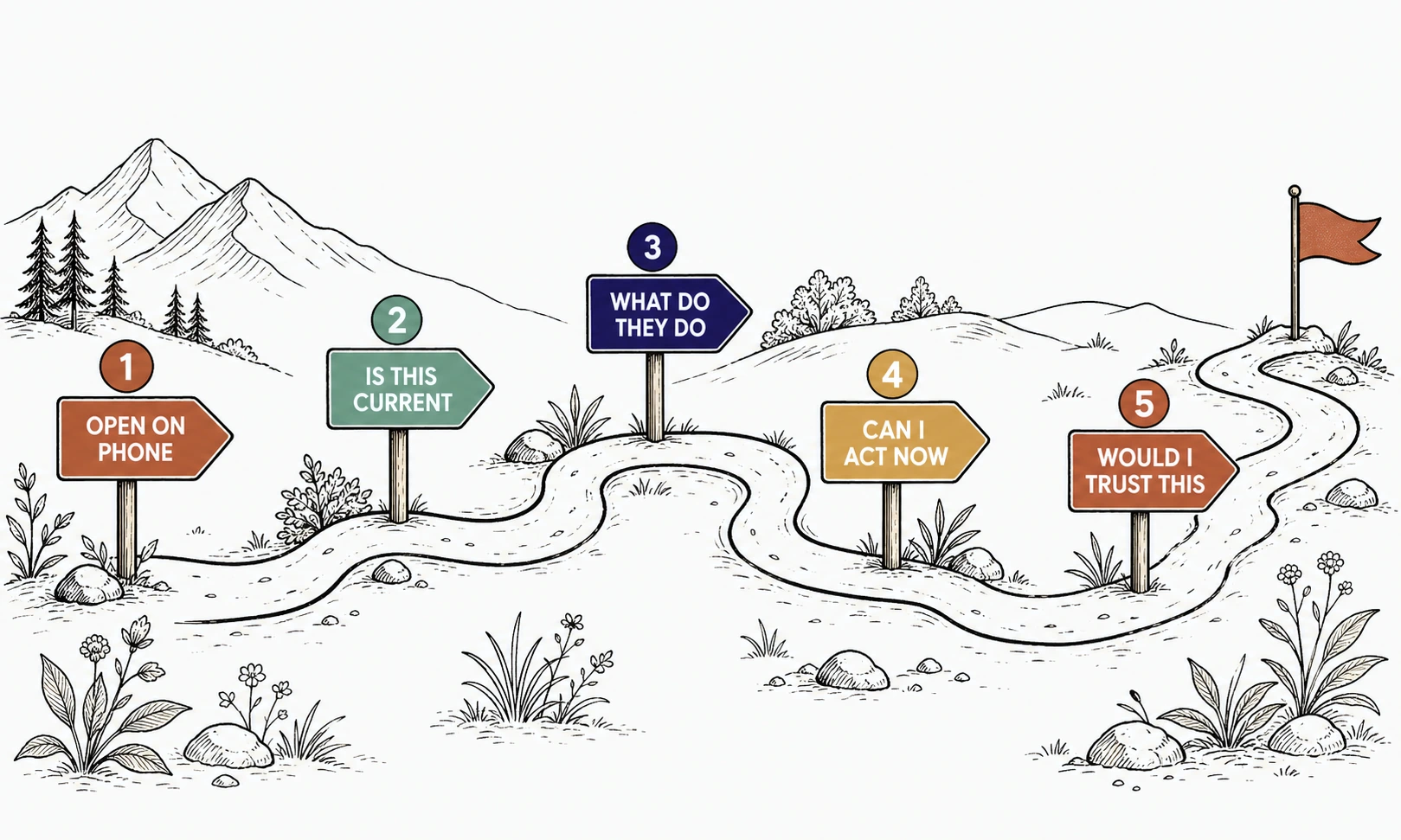
If the audit is smooth and the site is current, keep Wix and save your money. If it snags on stale details, a buried next step, or a slow mobile load, you now know precisely what an alternative has to solve. Switch for that reason, not because a review site ranked one builder over another.
If you want to see the handled model in full, start with the Mirin platform page. When budget becomes the question, Mirin pricing is public. For the deeper argument on getting a first site right, read how much a small business website really costs. And the Mirin Journal keeps field lessons like this one together.
Where Mirin fits among the alternatives
Mirin is the alternative for an owner who wants the site handled, not a new dashboard to learn.
The split is simple. You keep every decision that is actually yours, your hours, your services, your prices, your offers. We operate the website. You tell us what changed, in plain language, and we shape a preview you approve. No editor ever becomes your second job.
If you love building your own site, stay on Wix for the flexibility. If the site keeps falling behind your business, and every update is a task you keep postponing, that is the exact gap Mirin was built to close.
Compare your Wix site to a homepage you never have to edit.
Send your current site and the one action you most want a visitor to take. We will shape a preview around that next step, so you can judge the switch for yourself.
Get my preview- Your update problem
- A preview shaped around it
- Review, ask for changes
- Live in days
The repeatable rule for a small business: pick the tool that keeps your site clear and current with the least of your attention. If Wix already does that for you, keep it. If the dashboard has quietly become the reason your site is out of date, now you know what to switch for.