
Yes, you can update your website without a developer. If your site runs on a modern builder or a handled service, changing your hours, prices, photos, or copy is a task you finish in minutes, from your phone, with no code and no ticket to anyone. The only thing standing between you and a live edit is knowing which of three setups you actually have.
Most owners believe updating a website is a developer job. For a long time it was.
That belief is why so many business sites still show last spring's prices and a phone number that changed in March. The edit was never hard. Reaching the person who could make it was. So the site quietly drifts out of date while you get on with the actual work.
This is the honest, current answer to how you keep your own site true without hiring anyone.
Want to know if your current site is even worth updating as it stands? Run it through the free Mirin scorecard. Sixty seconds, no signup.
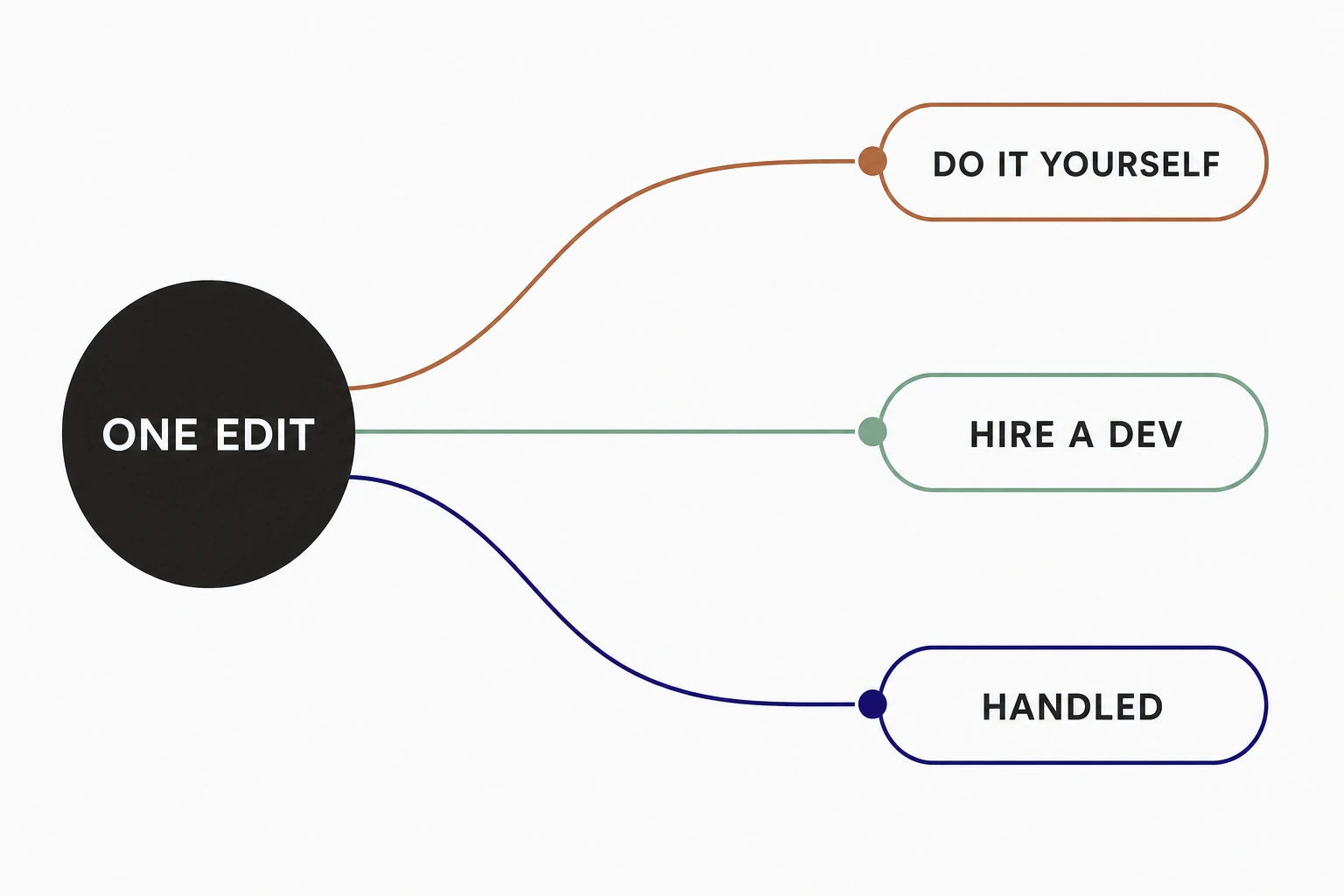
One edit, three ways to make it
What updating a website without a developer actually means
Updating a site without a developer means editing your live pages directly, through a visual editor or a handled service, instead of sending changes to someone who writes code.
There is a real distinction hiding here. Editing content is not the same as building a site. Changing your hours, swapping a photo, fixing a typo, or adjusting a price is content work, and every modern platform is designed so a non-technical owner can do it. Rebuilding your layout or adding a booking system is closer to development. This article is about the first kind, the everyday edit, which is the kind you actually need to make and the kind that keeps stalling.
The reason it matters is trust. First impressions of a website are almost entirely visual and almost instant. The Stanford Web Credibility research led by B.J. Fogg found that 75% of people judge a company's credibility based on its website design. A site showing stale hours or a dead link does not read as busy. It reads as closed.
The three setups, and what each lets you change yourself
Which updates you can make alone depends entirely on which of three setups your website runs on.
Almost every business site falls into one of three buckets, and the bucket, not your tech skill, decides how much you can do without help.
A do it yourself builder
If your site is on Squarespace, Wix, or Shopify, you already own the keys. You log in, click the text or image you want to change, edit it in place, and hit publish. Hours, prices, photos, staff, and copy are all yours to change in minutes. The catch is that the work, and the remembering, land on you. The tool makes edits possible. It does not make them happen.
A custom or WordPress site
If a freelancer or agency built you a custom site, or a heavily customized WordPress one, small edits often still route back through them. Some WordPress setups give you a friendly editor. Many hand you a dashboard fragile enough that one wrong click breaks a page, which is exactly why the developer asked you not to touch it. This is the setup where owners feel most stuck, because the site is technically yours but practically theirs.
A handled service
If your site is on a done for you platform like Mirin, you request the change in plain language and it gets made for you, or you make it yourself in a visual editor with no way to break anything. Either way there is no code, no ticket queue, and no waiting on a stranger's calendar. The point of a handled service is that keeping the site current is part of the service, not a favor you have to ask for.
Why the edit never gets made
Why website updates stall even when they are easy
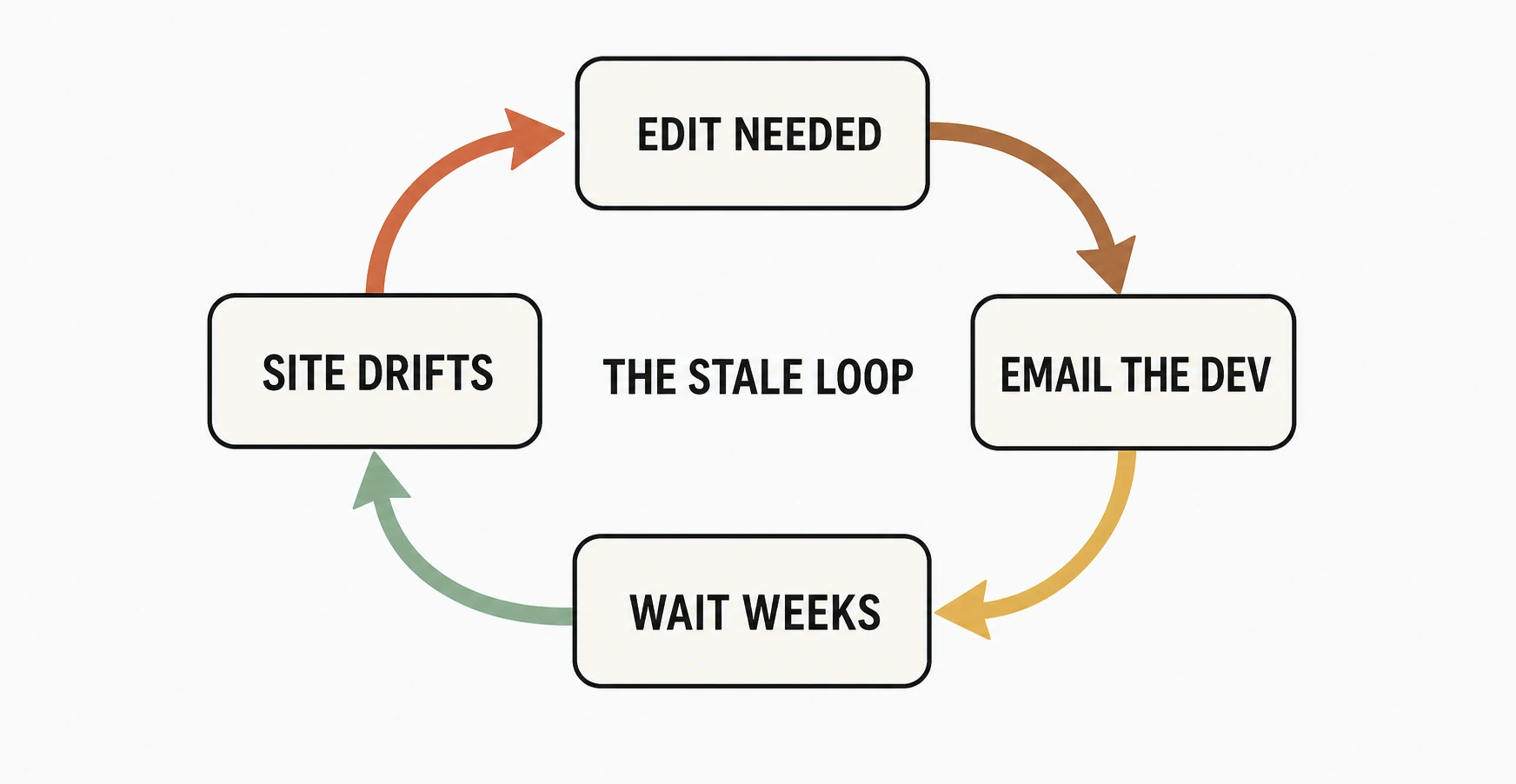
Updates stall because of the handoff around the edit, not the edit itself.
The change is thirty seconds of typing. Finding the login, or emailing the developer, or waiting for a reply, or relearning the tool you touch twice a year, is the part that eats a week and then a month. The problem is rarely the button. The problem is Tuesday, when you meant to do it and the day filled up instead.
The cost of that drift is not abstract. Consumers punish inconsistency fast. BrightLocal's consumer research found that the vast majority of people read online reviews for local businesses, and they cross-check what they read against your site. When your posted hours contradict your Google listing, the doubt does the damage, not the wrong hour.
Speed of access compounds it. Since the majority of web traffic is now on mobile, the update you keep postponing because it means opening a laptop is one you would make instantly if you could do it from the phone already in your hand. As usability researcher Jakob Nielsen puts it, "People don't read pages. They scan them." A scanning visitor lands on the one wrong detail first.
See what on your site is quietly out of date.
Send Mirin your site. We grade it against the things a first-time visitor actually checks, current details, speed, and a clear next step, and tell you what to fix first.
Run the free scorecard- Paste your site URL
- We grade it in seconds
- You see the stale spots
- You decide
How to make a website edit yourself, step by step
On any modern builder, the edit follows the same four steps, and none of them require code.
First, log in to your site's editor from any browser, phone included. Second, click directly on the thing you want to change, the headline, the hours, the photo, the price. Third, type the new value or swap the image right there in place, the way you would edit a document. Fourth, hit publish, and the live page updates within seconds.
That is the entire loop. If your builder makes any of those four steps feel risky, that is a signal about the builder, not about you. The whole promise of a visual editor is that you cannot break the site by fixing a typo. If yours does not feel that safe, the honest fix is a platform where updating is designed to be effortless rather than a platform where you tiptoe.
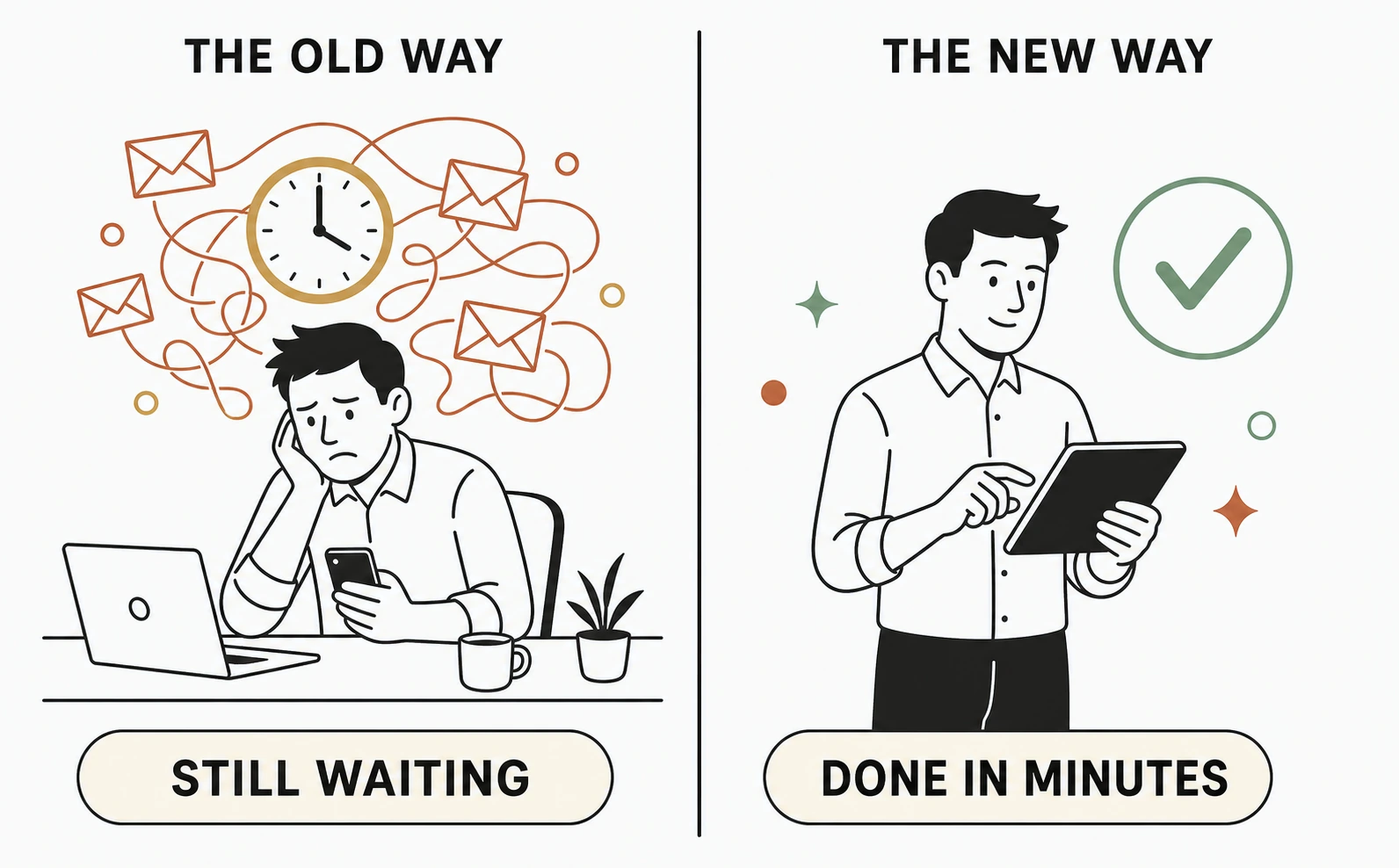
The Tuesday edit, two ways
What we see when owners can finally update their own site
Across the sites we build and host at Mirin, the single biggest jump in a site's usefulness comes not from a redesign but from the owner getting the keys.
When an edit is a thirty second phone task instead of a favor to ask, owners start making the small changes they always skipped. A seasonal promo goes up the day it starts. A new team member appears the week they are hired. A price change lands before the first awkward conversation at the counter. None of these are dramatic. Together they are the difference between a site that feels alive and one that feels like a flyer someone printed once. We have watched businesses that never touched their old site for a year make four edits in the first month simply because the friction was gone. The updates were always wanted. The access was the thing missing.
This is also why a handled setup and a good self-serve editor end up in the same place. Both remove the handoff. One removes it by doing the change for you, the other by making the change trivially safe. What matters is that the wait disappears.
The updates worth making first
Start with the details a first-time visitor checks before they trust you, because those are the ones a stale site gets wrong.
Your hours and your phone number come first, since a wrong one there costs you the visit outright. Then your prices, so nobody arrives expecting last year's number. Then a current photo of the real space or the real people, which does more for trust than any amount of copy. After that, fix any headline that no longer describes what you actually do now. These four take an afternoon on a good builder, or a single message on a handled one.
Whatever you are on, the deciding question is the same: can you make a small change today, from your phone, without asking anyone. If the answer is no, the site is working against you every week you wait. If the real question underneath is what a modern setup costs, here is what a small business website costs across every path, and if you are weighing handled against do it yourself, here is Mirin versus Squarespace for owners who want the website handled.
Done right, keeping a site true stops being a project with a launch day and becomes a two minute habit. See how the handled version folds building and updating into one line on Mirin pricing.
See your site rebuilt as one you can actually keep current.
Send Mirin your current site. We will shape a free preview built so that changing your hours, prices, or photos is a two minute task, from your phone, with nobody to email.
Get my preview- Send your current site
- We shape a preview
- You try an edit yourself
- You decide, live in days
The repeatable rule: updating your website should never wait on a developer. Get on a setup where a small change is a two minute habit, and your site stays as current as the business it represents.