
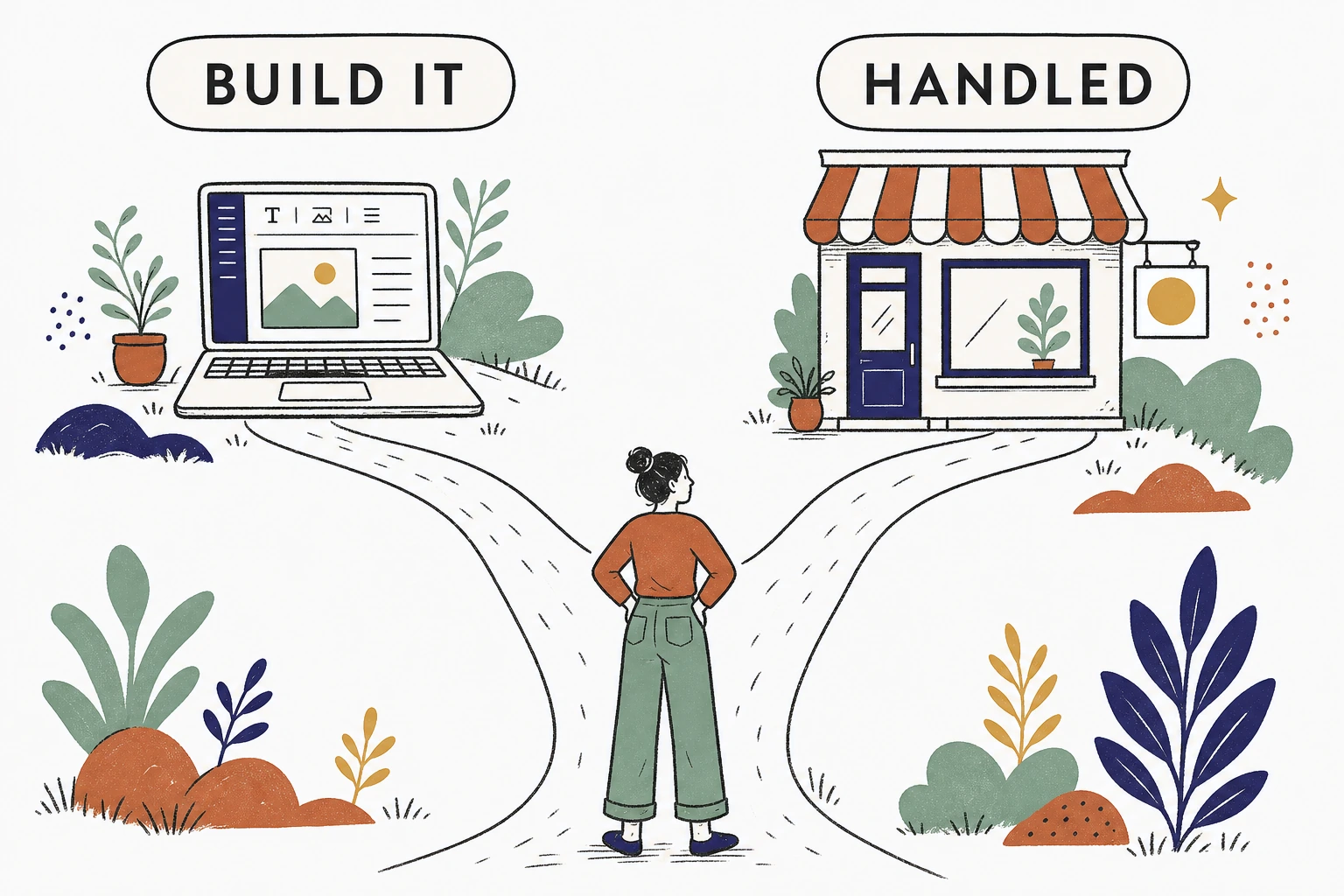
Squarespace is a genuinely good product, so the honest answer is not Mirin over Squarespace, it is the right one for how you want to spend your time. Squarespace wins if you enjoy building and maintaining the site yourself. Mirin wins if you want the whole thing handled, built for you and kept current, so you never open an editor again.
Most "Squarespace alternative" lists compare price and templates, which misses the only question that matters.
The real fork is not which tool has nicer fonts. It is whether the website is a thing you own and operate, or a thing that is simply handled for you. Squarespace is the best of the first kind. This is an honest look at where an owner who wants it handled outgrows a do it yourself builder, and where they do not.
Want to see how your current site scores before you switch anything? Run it through the free Mirin scorecard. Sixty seconds, no signup.
One owner, two honest paths
What Squarespace is genuinely good at
Squarespace makes it easy for a design minded owner to build a clean, modern site without hiring anyone.
The templates are the best in the do it yourself category, the mobile rendering is reliable, and you will not touch a line of code. It also quietly owns the booking piece. Squarespace acquired Acuity Scheduling in 2019, so appointments, classes, and intake can live under one login with your site. For a salon, a studio, or a consultant who wants to run the tool themselves, that is a real advantage.
The scale speaks for itself. Squarespace reports serving millions of subscriptions across its platform, and most of those owners are happy. If you like logging in, arranging sections, and tuning your own page, Squarespace is not a compromise. It is a good home. Do not let anyone talk you out of a tool you enjoy.
So the question is not whether Squarespace is good. It is whether operating the site yourself is the job you actually want.
Where an owner who wants it handled outgrows a DIY builder
You outgrow a do it yourself builder the moment the upkeep stops being fun and starts being Tuesday.
A do it yourself builder hands you a finished site and, with it, a standing chore. Prices change. Hours shift. A new service launches, a staff member leaves, a holiday closes you early. Every one of those is a login, a hunt for the right block, and twenty minutes you meant to spend on the business. The tool did not fail. It just handed the operating work to the person with the least time for it.
The hidden chore inside do it yourself
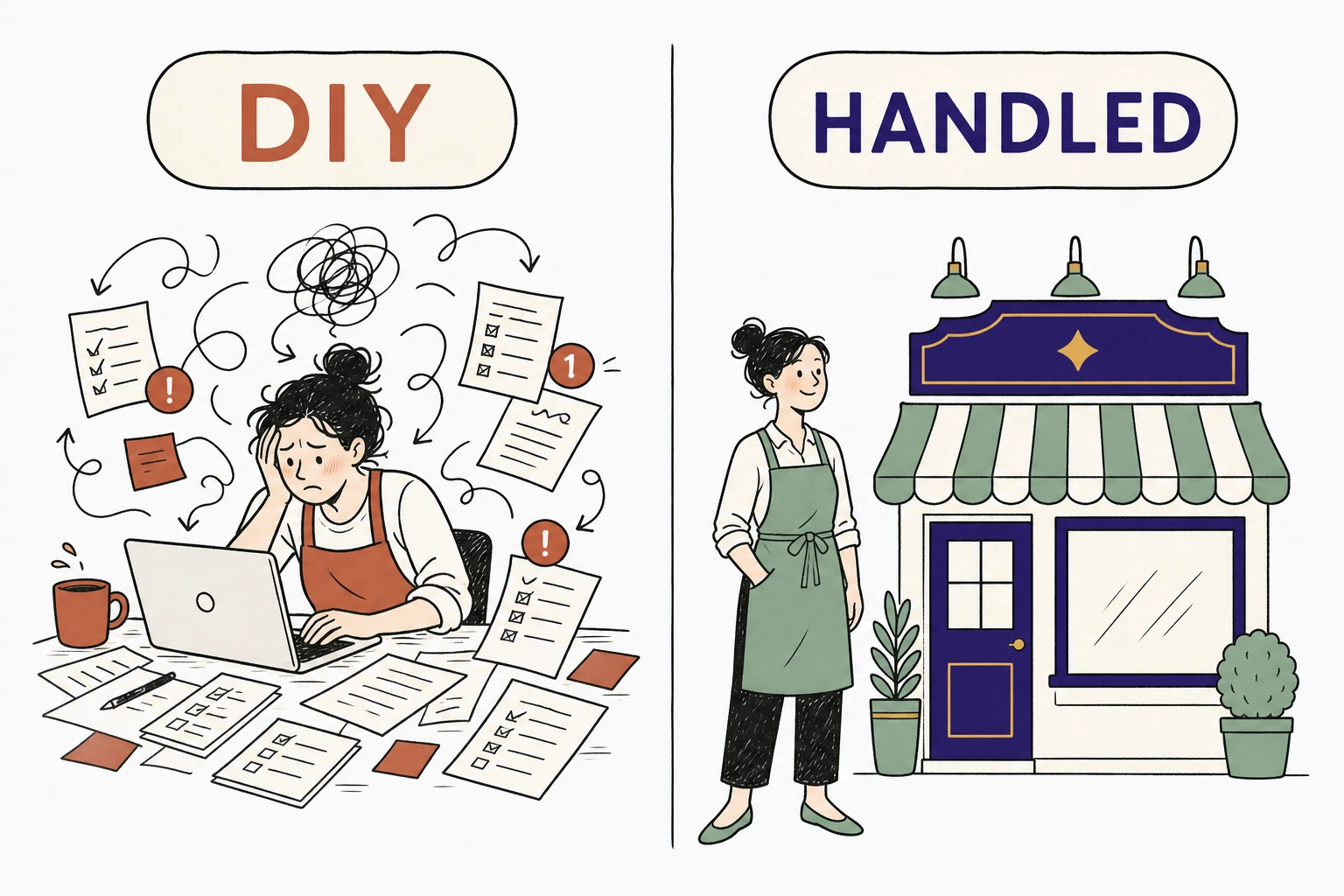
The cost of that chore is not the monthly fee. It is the site going stale. When updating the page is your job and your job is already full, the page slowly stops telling the truth. The stale site is the one that quietly costs you the booking, because a visitor cannot tell the difference between "closed" and "not updated since spring."
Here is the pattern we see most. Across the small business sites owners send us at Mirin to audit, the complaint is almost never the design. Squarespace templates look fine. It is that the content has drifted out of date, months since the last real edit, because keeping it current was one task too many. The builder was never the bottleneck. The owner's calendar was.
First impressions make that drift expensive. The Stanford Web Credibility research led by B.J. Fogg found that 75% of people judge a company's credibility based on its website design. A site that reads as neglected reads as a business that might be too.
See where your current site is quietly losing customers.
Send Mirin your site, Squarespace or anything else. We grade it against the parts that make a visitor act, speed, trust, and a clear next step, and tell you what to fix first.
Run the free scorecard- Paste your site URL
- We grade it in seconds
- You see the gaps
- You decide
What handled actually means with Mirin
Handled means you send the change and it goes live, without you ever opening an editor.
With Mirin, the build is done for you from your existing site or notes, and the upkeep folds into the same subscription. New price, new hours, new service, you send a message and the page is updated for you, usually the same day. There is no block to find, no template to fight, no weekend lost. The site stays true because keeping it true is our job, not a task sitting on your list.
How a handled change actually flows
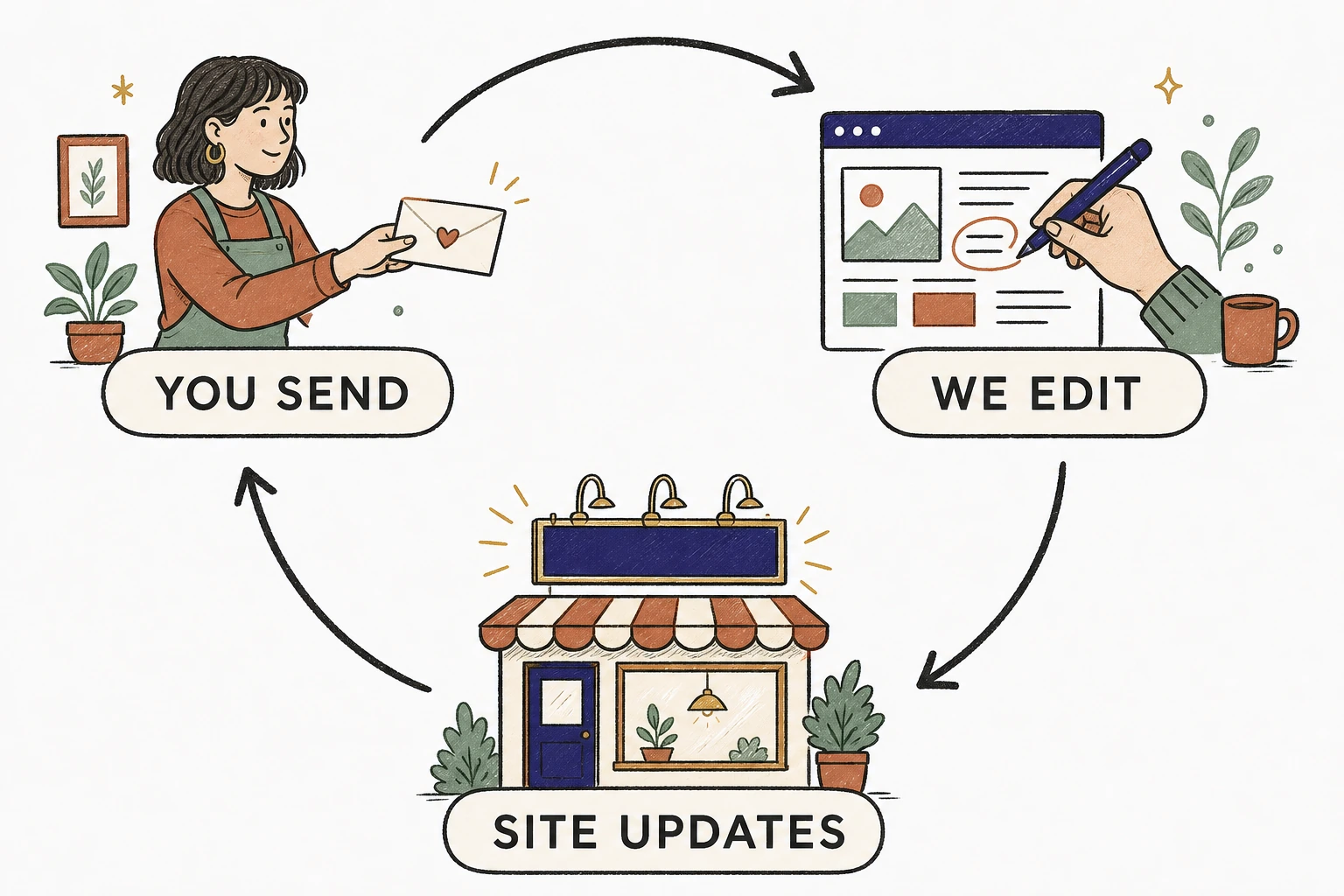
That is the whole difference, and it is not about features. Squarespace hands you a great tool and the operating work. Mirin hands you a finished, current page and keeps the operating work. Speed is part of why that matters, because your visitor is impatient. Google's mobile benchmarks show that as a page goes from one second to three seconds to load, the probability of a bounce rises 32%. A handled site that is built lean and kept lean protects that, without you monitoring it.
Reputation carries the rest. As Jeff Bezos put it, "Your brand is what other people say about you when you're not in the room." A current site that surfaces a few real reviews does that work quietly, which is why BrightLocal's consumer research found that a large majority of people will only use a business rated four stars or higher. Keeping those signals fresh is exactly the upkeep that slips on a self managed site.
Squarespace or Mirin, matched to who you are
The honest answer is a table, not a winner, because the right choice turns entirely on how you want to spend your time.
| If you are... | Better fit | The trade you accept |
|---|---|---|
| Design minded and you enjoy building it | Squarespace | Great control, the upkeep stays yours |
| Running your own booking and classes | Squarespace with Acuity | One login, you operate it |
| Time poor and you want it off your plate | Mirin | Higher hands off value, less DIY control |
| Tired of your site going stale | Mirin | Updates handled for you, not instant self edits |
| Just testing whether you need a site at all | Squarespace or a free trial | Cheap to start, work is yours |
Notice that Squarespace wins three of the five rows. That is not diplomacy. If you like operating your own site, a done for you service is paying for work you would happily do. The case for Mirin is narrow and specific. It is for the owner whose scarcest resource is time and whose least favorite task is a website.
How to choose without wasting a weekend
Pick based on the one resource you have least of, time or the willingness to maintain it, and stop comparing template galleries.
If you have more time than budget and you like the work, start a Squarespace trial and give yourself a weekend. Since well over half of all web traffic is now on mobile, whatever you choose, judge it on your phone first, not your laptop. If the site is the last way you want to spend a Sunday, a handled service pays for itself in the evenings you keep.
The deciding factors are the same on either platform: is it fast, does it read like you, and can someone act in two taps. If budget is the real question underneath this one, here is how website cost breaks down across every path, and if you want the same honest fit lens for a specific field, see the best website builder for a private practice.
Done right, the handled option folds the build and the upkeep into one line, so the fast, warm, current page stays true as your prices and hours change. See how that works on Mirin pricing.
See your business rebuilt as a site you never have to maintain.
Send Mirin your current Squarespace site or your existing page. We will shape a free preview that gets the speed, the warmth, and the next step right, so you can compare the handled version to whatever you run now.
Get my preview- Send your current site
- We shape a preview
- You compare it to your site
- You decide, live in days
The repeatable rule: there is no universal winner between Squarespace and Mirin, only the best fit for how you want to spend your time. If you want to run it, run Squarespace. If you want it handled, that is the whole reason Mirin exists.