Match an ad promise to a landing page by making the page repeat the ad's exact promise in its headline, keeping it front and center. This is called message match. When the words a person clicked greet them again at the top of the page, they stay. When the page talks about something else, they leave, and you paid for that click anyway.
That is the whole answer. The page has to keep the promise the ad made. Everything below is how, and why almost nobody does it.
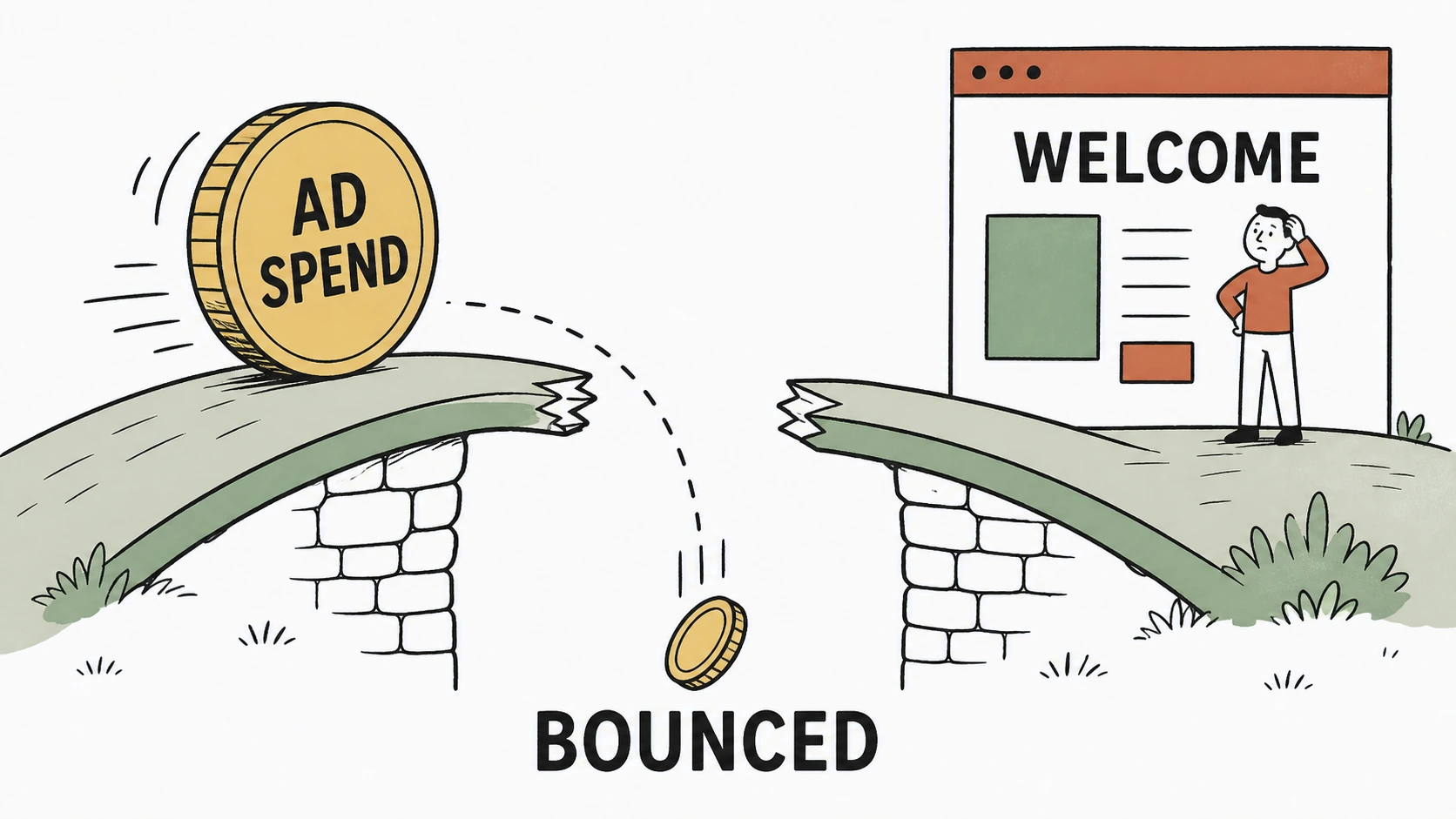
Here is the problem. Most people write a sharp, specific ad, then send the click to a generic homepage that says "Welcome" and lists nine things the business does. The visitor arrived carrying one thought, the thing the ad promised, and the page never mentions it. So they do the fast, rational thing. They leave. You did not have a traffic problem. You had a broken promise.
Not sure whether your page keeps the promise your ads make. Run it through the free Mirin scorecard. Sixty seconds, no signup.
The promise the ad made versus the page that broke it
What matching an ad to a landing page actually means
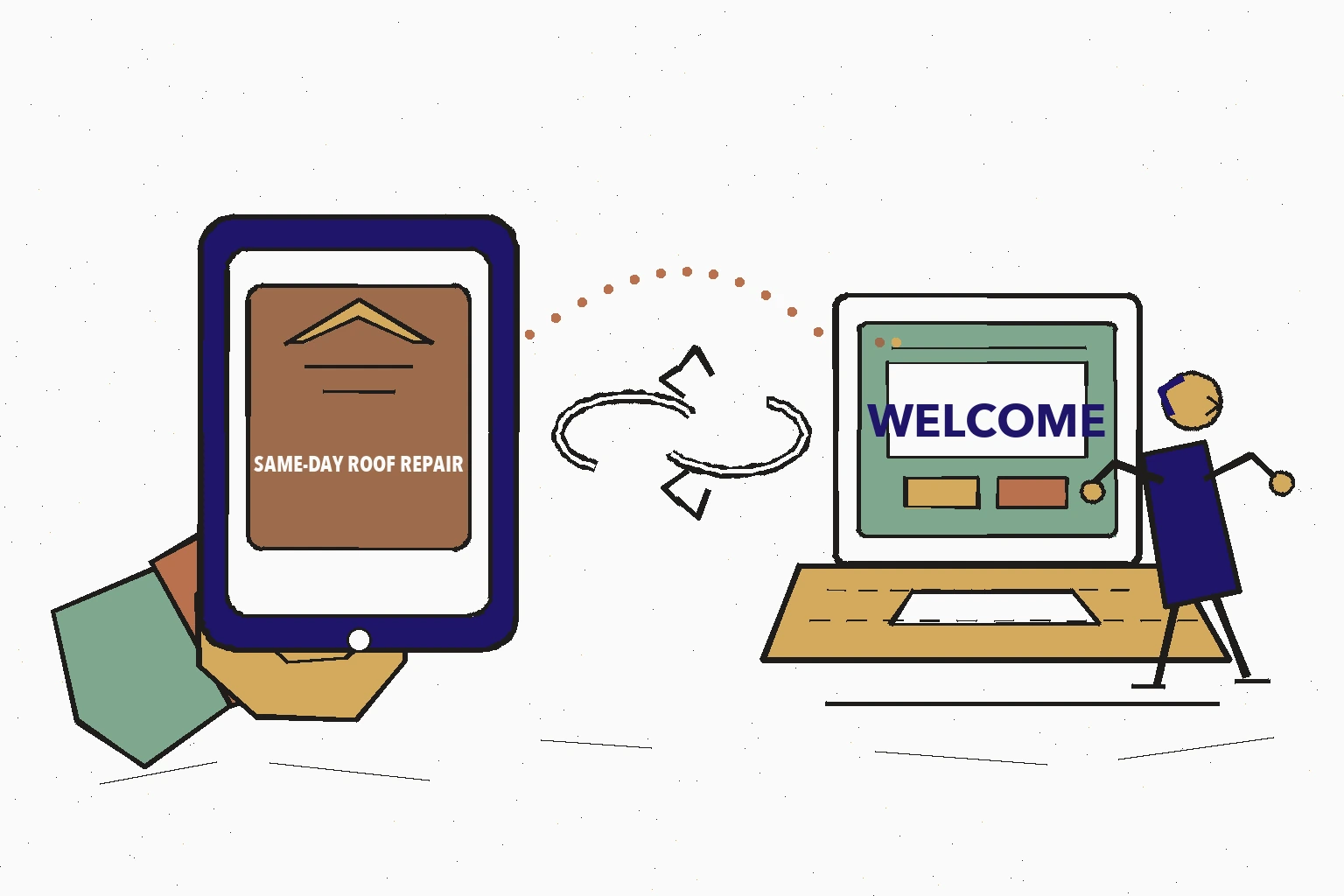
It means the first thing a person sees on the page is the same promise, in the same words, that made them click the ad. Nothing clever. The same words.
The industry term for this is message match. Unbounce, which coined it, defines message match as how well your landing page headline matches the call to action that was clicked to arrive there. Strong message match reassures people they have come to the right place, so they stay. Weak message match makes them doubt they clicked the right thing, so they leave to go check. A match is not a paraphrase and it is not the same theme. If the ad said "Same-day roof repair in Austin," the page headline says "Same-day roof repair in Austin," not "Quality roofing solutions for your home."
This is how rare it is. In Unbounce's analysis of thousands of paid campaigns, Oli Gardner concluded that 98 percent of paid ads have poor message match with their landing pages. "You're throwing away 98% of your PPC budget," Gardner wrote, because the ad and the page are talking about two different things. Almost every advertiser is paying for clicks and then breaking the promise that earned them.
Why a mismatched page quietly loses the click you paid for
Every page that answers a specific ad with a generic welcome asks the visitor to do the work of figuring out if they are in the right place, and most of them will not.
Picture the moment. Someone searched "same-day roof repair," saw your ad promise exactly that, and clicked with a leaking roof on their mind. Your homepage opens with a hero photo, a tagline about craftsmanship, and a menu of services. The word "same-day" is nowhere. In the second and a half before they scroll, they cannot confirm the one thing they came for, so they hit back and click the next ad. The promise was made and then abandoned at the door. You still paid for the click.
Where the paid click goes to die
And they decide fast, because the intent was urgent to begin with. According to Think with Google, 76 percent of people who search for something nearby on their smartphone visit a related business within a day. Someone clicking a "near me" ad is ready to act today. A page that makes them hunt for the promise hands that ready buyer to the competitor whose page said the right thing at the top.
Why keeping the promise pays you back twice
Matching the page to the ad does not just save the visit, it lowers what the next click costs, because the ad platform is grading the match too.
Google scores every keyword with a Quality Score built from three parts, and one of them is landing page experience. In its official documentation, Google states that Quality Score is calculated from expected clickthrough rate, ad relevance, and landing page experience, where landing page experience measures how relevant and useful your page is to people who click your ad. A page that repeats the ad's promise reads as relevant. A generic homepage reads as less relevant, so it earns a worse landing page experience, and worse Quality Score tends to mean you pay more per click for the same position. Keep the promise and the same budget buys more visits.
There is a human tax on the mismatch too, paid before anyone reads a word. In the Stanford Web Credibility Project, based on three years of research with more than 4,500 people, 46.1 percent of people judged a site's credibility in part on its visual design. "People do judge a website by how it looks," said B.J. Fogg, the Stanford psychologist who directed the research. If the page a stranger lands on looks generic and off-topic, the doubt starts before your headline gets a turn.
See exactly where your page breaks the promise your ad made.
Send Mirin the page your ads point to. We grade the things that decide whether a paid click stays, the headline match, mobile ease, one clear action, and load speed, and tell you what to fix first.
Run the free scorecard- Paste your page URL
- We grade it in seconds
- You see the gaps
- You decide
What a landing page that keeps the promise actually does
It does four plain things a person who just clicked can act on immediately, not four things a brand agency admires.
Lead with the ad's exact promise as the headline, so the first line on the page is the phrase that earned the click. Carry one action, the thing the ad offered, and remove the navigation menu and the nine competing links that pull attention off it. Unbounce calls this attention ratio, the count of things to click against the one thing you want clicked, and says a focused landing page should be one to one, while a homepage is closer to forty to one. Prove the promise with the specifics a buyer needs, the price, the area you serve, the real photo, the availability. Then make it effortless on a phone, since that is where the ad was seen and where the decision gets made.
What a promise-keeping page is built from
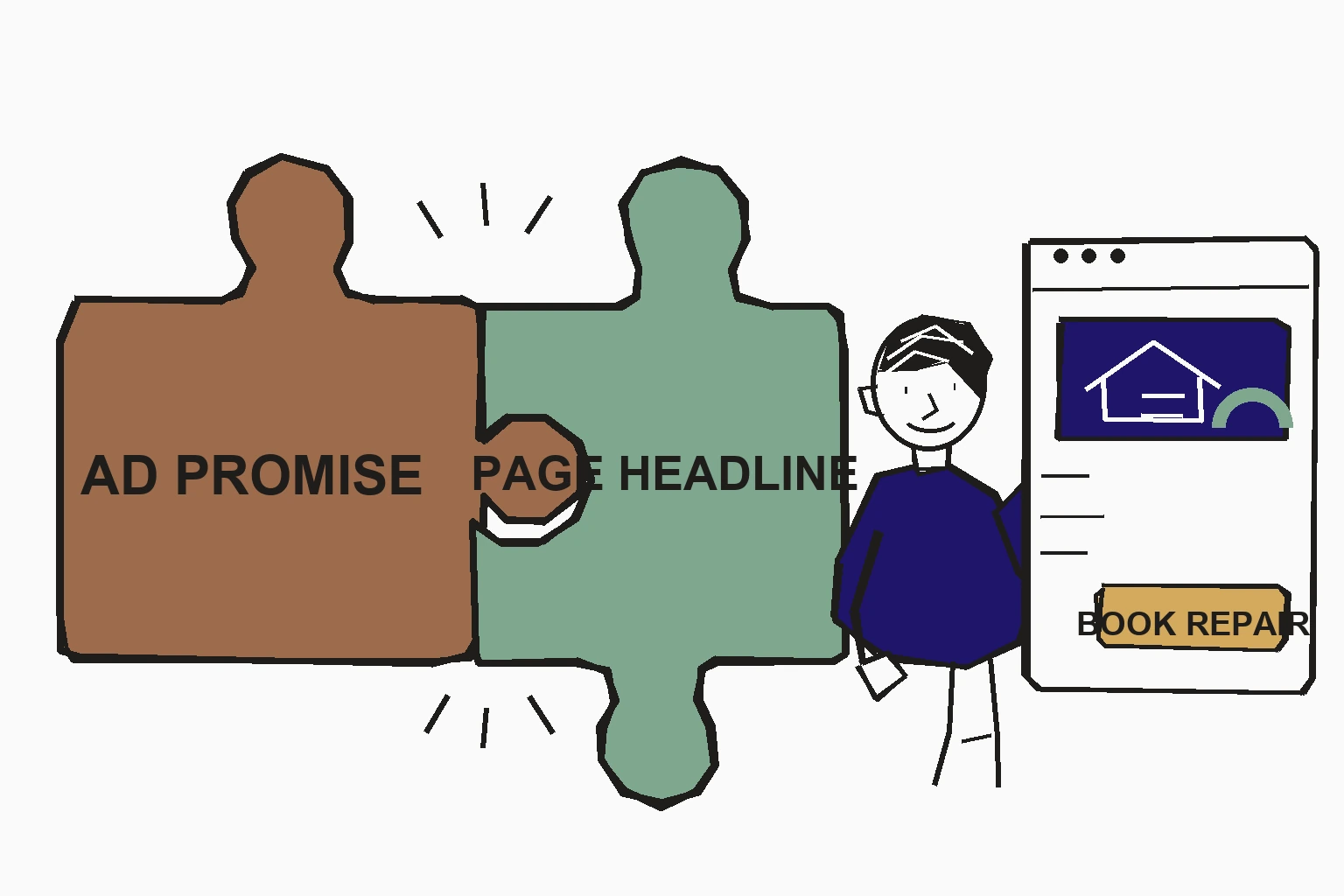
Across the ad campaigns and previews we have built at Mirin, the single change that recovered the most wasted spend was not a new offer or a bigger budget. It was rewriting the landing page headline to say, word for word, what the ad promised, and cutting the site menu off that one page. Visitors who used to bounce hunting for the thing they clicked started reading, because the page finally admitted why they were there. The click stopped being a coin toss and started being a conversation the ad had already begun.
The parts to cut and the parts to keep
Cut everything that distracts from the promise. Keep everything that confirms it and lets the person act on it now.
Cut the generic "Welcome" hero, the full navigation menu, the links to unrelated services, the slideshow of things this visitor did not come for. Keep the ad's promise as the headline, one clear action that matches the ad, the proof that promise is real, and a fast phone-first layout. The page that keeps the promise is not the one with the most on it. It is the one where a stranger who just clicked can see, in a second, that the page is about the exact thing they wanted.
How to make your page keep the promise without a rebuild
Most of these fixes are a decision, not a construction project, and you should not have to file a developer ticket every time you launch a new ad.
For $199 a month, Mirin builds the page, hosts it, and makes the changes for you, with the ad's promise as the headline, one clear action, the proof, and a phone-first layout. When you launch a new ad or offer, you tell Mirin in plain language what the ad now promises, and Mirin updates the page headline to match, shows you a preview, and publishes it. No request queue, no invoice per change, so the page can keep pace with the ads. See the full breakdown on Mirin pricing, or how the handled model works on the Mirin platform page.
See your page rebuilt to keep the exact promise your ad makes.
Send Mirin your current page and the ad pointing to it. We will shape a preview around the promise, matched headline, one action, the proof, and a phone-first layout, so you can see the version that keeps the click before you pay.
Get my preview- Send your page and ad
- We shape a matched preview
- You review the match
- You decide, live in days
The repeatable rule: keep the promise. A landing page that earns its ad spend is not the one with the cleverest hero or the longest list of services. It is the one that greets a stranger with the exact thing they clicked for, because the click was a promise, and the page is where you either keep it or break it.